






Unidad de Neurociencias
Responsables y contacto:
Memory and Cognitive Disorders Unit at Quirónsalud Torrevieja
The specialists at the Memory and Cognitive Disorders Unit at Quirónsalud Torrevieja provide specialist, multidisciplinary care for patients with Alzheimer’s disease and other forms of dementia. Individualised medical treatment and neurocognitive rehabilitation plans are established with the aim of slowing disease progression and helping patients maintain their independence for as long as possible.
The Unit also includes a specialist neurology nurse, who provides patients and their families with education and guidance on the condition and its management. The nurse closely monitors the patient’s progress throughout the care pathway, with the aim of optimising their quality of life.
To provide a comprehensive approach to conditions affecting cognitive function, we have access to state-of-the-art technology, enabling rapid and accurate diagnosis.
The patient’s different symptoms can be assessed in a single day, allowing our specialists to reach an accurate and reliable diagnosis.
Dr Erika Torres, Consultant Neurologist, explains what Alzheimer’s disease is, its causes and symptoms, and the treatments currently available
What is cognitive impairment and what are its symptoms?
Cognitive impairment occurs when specific functional abilities of the brain are lost as a result of damage to the areas responsible for controlling them.
Symptoms may include:
- Difficulty communicating.
- Memory loss.
- Changes in perception.
- Behavioural changes, such as repeatedly walking around the house or asking the same questions, as well as changes in mood.
- Loss of abilities such as calculation, abstract thinking or judgement.
Early symptoms often include attention difficulties or minor memory lapses, but may also involve problems concentrating or organising tasks, loss of interest, or other changes in personality and behaviour.
What does the Memory and Cognitive Disorders Unit at Quirónsalud Torrevieja offer?
- Multidisciplinary assessment and advice.
- Early diagnosis.
- Personalised treatment.
- Selection of the most appropriate combination of available treatments, including lifestyle measures, medication, supplements and the Memory and Cognitive Disorders Programme.
Memory and Cognitive Disorders Programme: a highly specialised private service
Quirónsalud Torrevieja has a dedicated Memory and Cognitive Disorders Programme designed to provide accurate diagnosis and comprehensive treatment for patients with dementia, including Alzheimer’s disease.
The main objective is to assess the patient from the multiple perspectives involved in these conditions, including neurological, neuropsychological, neurophysiological, neuroradiological and neurosurgical assessment, among others, in order to establish a rigorous diagnosis.
Quirónsalud Torrevieja is therefore one of the few centres in Spain with a multidisciplinary team working together to identify early cases of the disease. This enables treatment to begin as soon as possible to help slow its progression, while also identifying patients whose cognitive impairment may have a treatable underlying cause.
An estimated 10.9% of people over the age of 70 in Spain are living with dementia, with Alzheimer’s disease being the most common form
What is Alzheimer’s disease?
Alzheimer’s is a degenerative brain disease that progressively impairs cognitive abilities, particularly memory. There is currently no cure, but treatments are available that can benefit patients and help slow the progression of the disease.
It is estimated that around 10% of people initially diagnosed with Alzheimer’s disease also have associated adult chronic hydrocephalus.
What is adult chronic hydrocephalus and what are its symptoms?
Hydrocephalus is an excessive accumulation of cerebrospinal fluid in the brain. This accumulation causes the fluid-filled spaces in the brain, known as ventricles, to enlarge. The resulting pressure can affect brain tissue and cause symptoms that may be mistaken for Alzheimer’s disease because of their similarities.
The main symptoms of adult chronic hydrocephalus include cognitive impairment, which can progress to dementia, difficulty walking, incontinence and a general slowing of movement.
Hydrocephalus is a potentially reversible condition. With early multidisciplinary diagnosis and appropriate treatment, patients may experience significant recovery. It is therefore important to recognise the symptoms described above and seek specialist medical advice promptly if changes are noticed in a family member.
How is hydrocephalus treated in adults?
Treatment for hydrocephalus may require the surgical placement of a shunt system in the brain to drain excess cerebrospinal fluid into the abdomen or, in certain cases, the heart, where it can be absorbed by the body.
Although the outcome of this surgical procedure varies from one person to another, improvement in symptoms may be achieved in approximately 50–90% of patients, helping them maintain a better quality of life.
Multidisciplinary diagnosis: key to identifying adult chronic hydrocephalus
At the Memory and Cognitive Disorders Unit, a cerebrospinal fluid (CSF) dynamics study can be carried out at the time of lumbar puncture for CSF analysis.
Depending on the results, and where there is a high clinical suspicion of associated chronic hydrocephalus, further assessment may be recommended through continuous monitoring of intracranial pressure waves.
Adult chronic hydrocephalus is one of the few causes of dementia that can be treated and is often potentially reversible
The coexistence of several conditions in the same patient increases the likelihood of cases in which cognitive impairment has multiple causes.
Even in these situations, identifying an abnormality in cerebrospinal fluid dynamics may lead to clinical improvement, particularly in walking ability and bladder control, thereby improving the quality of life of both the patient and their family.
Memory and Cognitive Disorders Programme
The programme follows a psychoeducational model based on the important role that the family environment plays in the progression of the condition and the patient’s quality of life.
Family members are recognised as active partners in the therapeutic process, making it essential that they receive appropriate information, guidance, support and training in strategies for managing the behavioural changes experienced by relatives with neurological conditions.
This approach helps families develop a better understanding of the behaviours and symptoms associated with their loved one’s condition. Through appropriate management strategies, we can provide greater confidence, reassurance and support for the entire family.
Group Workshops
At Quirónsalud Torrevieja, we offer group workshops designed to create a supportive environment that encourages interpersonal relationships and helps participants identify, understand, manage and alleviate emotions, make decisions and find practical solutions.
The group approach offers significant benefits in terms of both effectiveness and efficiency, while also providing valuable support for families as a whole. It strengthens the therapeutic relationship and encourages the active involvement and commitment of participants.
Sharing experiences, concerns and common challenges also helps family members feel understood and reduces feelings of isolation by providing a dedicated supportive environment.
Book an Appointment with Our Cognitive Disorders Specialists in Torrevieja
Do you have any questions about our services? Contact us using the form and we will get back to you as soon as possible.
Articles on
View the latest articles in Tu canal de salud.
Artículos en tucanaldesalud.com Memory and Cognitive Disorders Unit
Artículos de TCS relacionados con la especialidad
 Canal vídeos
Todo sobre el Parkinson: prevención y tratamientos
La doctora Erika Torres San Narciso, especialista en Neurología del Hospital Quirónsalud Torrevieja y el Centro Médico Quirónsalud Alicante, nos advierte de los síntomas del Parkinson, cómo prevenirlo, y los tratamientos disponibles Canal vídeos
Tips para prevenir el insomnio
Josefina Raga Forcadell, enfermera de Neurología del Hospital Quirónsalud Torrevieja y el Centro Médico Quirónsalud Alicante, nos avisa de las causas del insomnio y nos ofrece consejos prácticos para evitar este problema para dormir



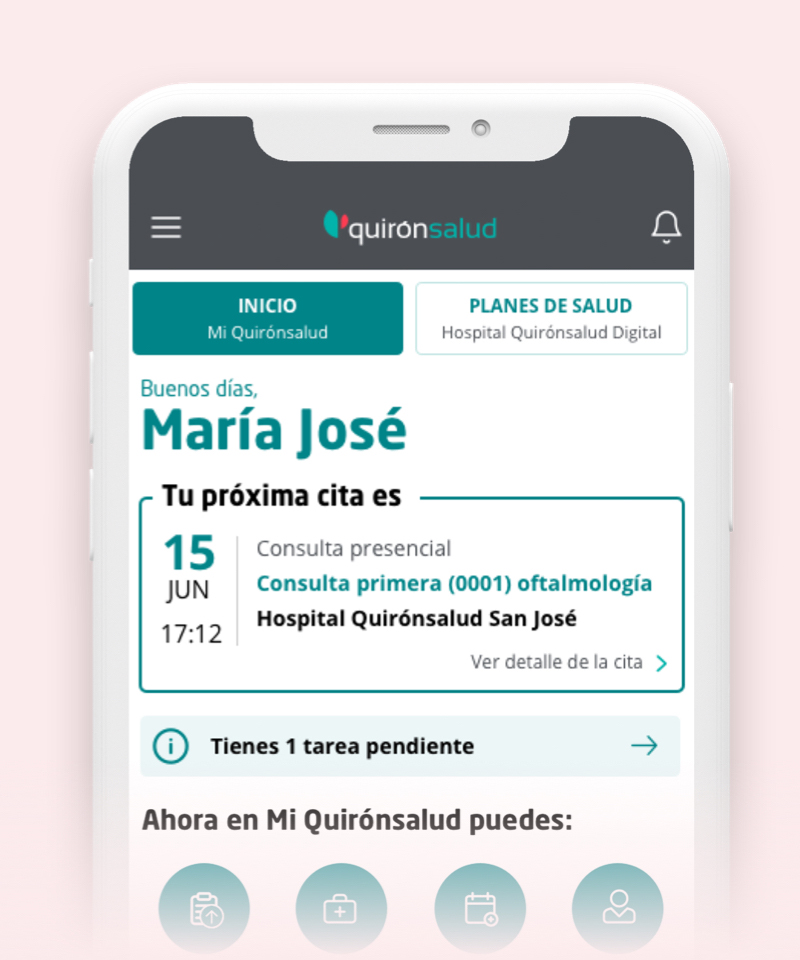
Personal health area: My Quirónsalud
Access any time of the day to take care of your health and that of your family.
My Quirónsalud is your private and secure personal space where you can request and manage your appointments or check your clinical reports without waiting, wherever you are.
Check it out!