






Gynecology and Obstetrics
Responsables y contacto:
Ovarian Cancer Specialists at Quirónsalud Torrevieja
At Hospital Quirónsalud Torrevieja, we have a highly experienced team specialising in the treatment of ovarian cancer.
What is ovarian cancer?
Ovarian cancer is characterised by the abnormal growth of cells in the ovaries. These cells multiply rapidly and may damage healthy tissues in the body. Standard treatment for ovarian cancer usually includes both surgery and chemotherapy.
Below, you can find everything you need to know about the ovaries and ovarian cancer, including symptoms, causes and available treatments.
What are the ovaries?
The ovaries are female reproductive organs that form part of the female reproductive system.
Where are the ovaries located?
The ovaries are two almond-shaped organs located on either side of the uterus, in the lower abdomen within the pelvic cavity.
Functions of the ovaries
The ovaries perform two key functions in the female body:
- Producing female hormones such as oestrogen and progesterone, which contribute to the development of female sexual characteristics (body shape, breast development, body hair, etc.).
- Producing and releasing an egg each month during the menstrual cycle.
The ovaries are essential for fertility and reproductive function in women.
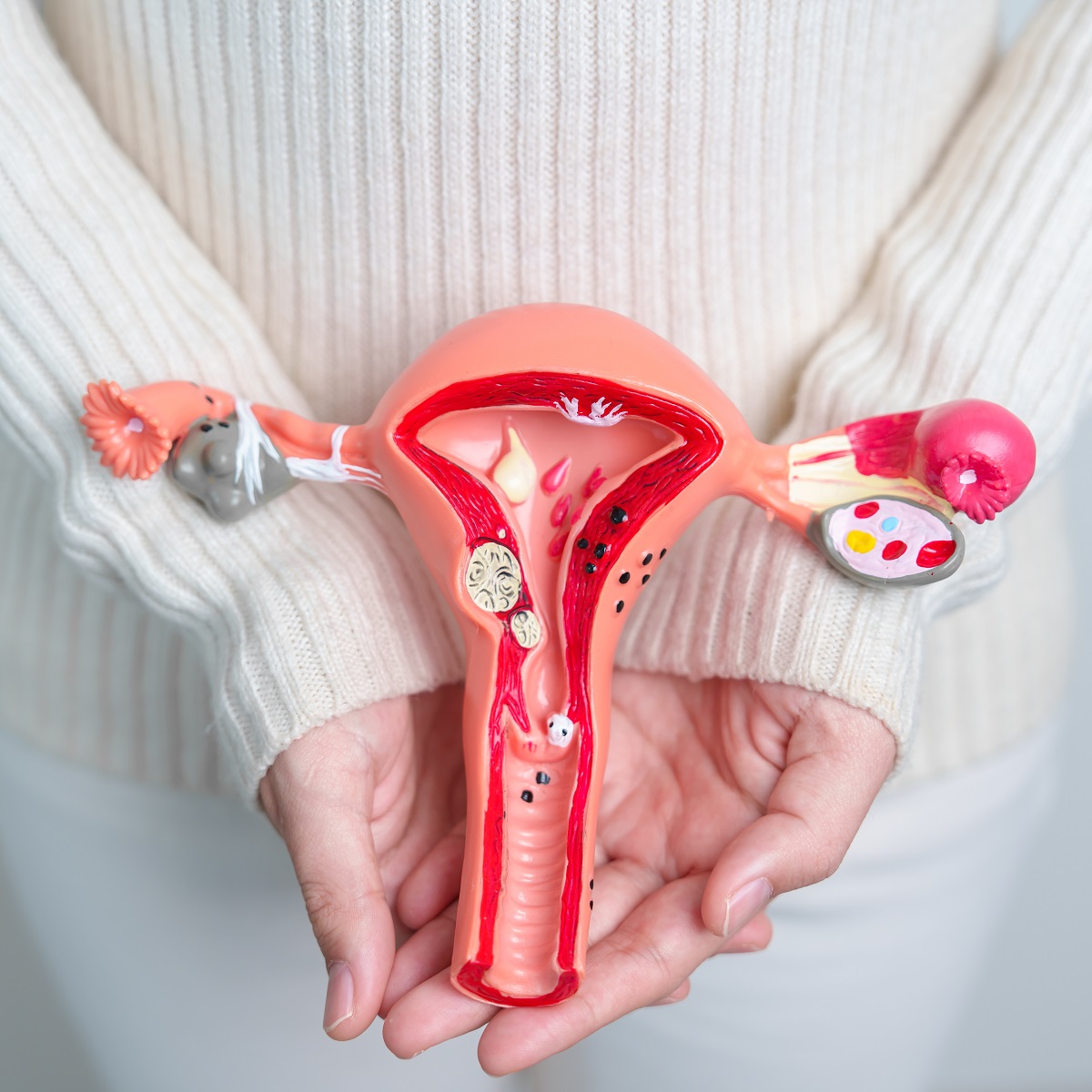
Ovarian disorders
The ovaries can be affected by various conditions and disorders, including:
- Ovarian tumours: These may be benign or malignant (ovarian cancer).
- Ovarian cysts: Fluid-filled sacs that develop on the ovaries. They can vary in size and are usually benign, often disappearing on their own. Types include dermoid cysts, follicular cysts, corpus luteum cysts, cystadenomas and endometriomas.
- Polycystic Ovary Syndrome (PCOS): A condition in which a woman has abnormally high levels of male hormones (androgens).
- Endometriosis: A condition where tissue similar to the lining of the uterus grows outside the uterus.
- Primary ovarian insufficiency: Occurs when the ovaries stop functioning normally before the age of 40.
- Ovarian torsion: Occurs when the ovary twists, cutting off its blood supply and causing acute abdominal pain.
What is ovarian cancer?
As mentioned above, ovarian cancer is a disease in which malignant cells form in the tissues of the ovary.
Types of ovarian cancer
There are three main types of ovarian cancer: epithelial carcinoma, germ cell tumours and stromal cell tumours.
- Epithelial carcinoma: The most common type of ovarian cancer. These tumours develop in the tissue covering the outer surface of the ovary. This category includes several subtypes, such as serous carcinoma (the most common), mucinous carcinoma and endometrioid carcinoma.
- Germ cell tumours: Malignant cells develop in the germ cells (eggs) of the ovary.
- Stromal cell tumours (SCST): These originate in the connective tissue cells that give structure to the ovary and produce hormones.
Dr Rodolfo Martín Díaz, specialist in Gynaecology and Obstetrics at Quirónsalud Torrevieja, explains ovarian cancer, including prevention, common symptoms and available treatments.
Causes and risk factors of ovarian cancer
The exact cause of ovarian cancer remains unknown, which means there is no guaranteed method of prevention. However, certain factors may increase the risk of developing ovarian cancer:
- Family history of ovarian cancer or inherited genetic mutations such as BRCA1 and BRCA2, which also increase the risk of breast cancer.
- Increasing age.
- Reproductive history, such as not having children or having a first child after the age of 35.
- Long-term hormone replacement therapy.
- Certain genetic disorders.
- Overweight and obesity.
- Never having been pregnant.
- Early onset of menstruation, late menopause, or both.
If you have a family history of ovarian cancer, it is important to share this information with your doctor.

Symptoms of ovarian cancer
Ovarian cancer may sometimes develop without obvious symptoms, making early detection more difficult. In addition, common symptoms can often be mistaken for benign conditions.
Signs and symptoms of ovarian cancer include:
- Abdominal bloating or increased abdominal size.
- Feeling full quickly when eating and loss of appetite.
- Unexplained weight loss.
- Pelvic discomfort.
- Persistent fatigue and shortness of breath.
- Chronic back pain.
- Changes in bowel habits, such as constipation.
- Frequent or urgent need to urinate.
- Discomfort during urination.
If you experience any of these symptoms and they persist or worsen over time, you should consult a specialist.
Detecting ovarian cancer in its early stages can significantly improve the chances of effective treatment and survival.

How is ovarian cancer diagnosed?
Diagnostic tests may include:
- Pelvic examination: During a pelvic exam, the doctor may detect abnormalities in the ovaries or pelvis. However, this examination alone cannot detect all cases of ovarian cancer.
- Blood tests for tumour markers.
- Transvaginal or transrectal ultrasound: This type of ultrasound provides detailed images of the ovaries and pelvis and may help identify abnormalities.
- CT scan or MRI: These imaging tests provide more detailed images of the ovaries and other pelvic organs and are useful for assessing the extent of the cancer and planning treatment.
- Ovarian biopsy: In some cases, a biopsy may be required to obtain a tissue sample and confirm the presence of cancer.
Can ovarian cancer be cured?
This depends on several factors:
- The stage at which the cancer is diagnosed.
- The specific type of ovarian cancer.
- The patient’s response to treatment.
- The patient’s overall health.
Ovarian cancer is generally more treatable when diagnosed in its early stages, before it has spread to other organs (metastasis).
Ovarian cancer life expectancy
Each case is unique, and treatment outcomes and survival rates vary depending on the individual patient’s circumstances. At our centre, we have a highly experienced oncology team dedicated to developing personalised treatment plans.
Ovarian cancer treatment
Treatment options for ovarian cancer include:
Surgery
Surgery is often the first step in the treatment of ovarian cancer. The extent of surgery depends on the stage of the cancer and may involve removal of the ovaries, fallopian tubes, uterus and other nearby structures affected by the disease.
Types of surgery
- Exploratory or staging surgery: Performed to determine the extent of the cancer and whether it has spread to nearby organs or tissues. Biopsies may also be taken during surgery.
- Cytoreductive surgery (tumour debulking): Used in advanced ovarian cancer when the tumour has spread within the abdomen. The aim is to reduce tumour burden and improve the effectiveness of other treatments such as chemotherapy.
- Bilateral hysterectomy with salpingo-oophorectomy: In some cases, particularly when the cancer is detected early and confined to the ovaries and fallopian tubes, the uterus, ovaries and fallopian tubes may be removed.
- Da Vinci robotic surgery
 : Robotic-assisted surgery is recommended in the treatment of ovarian cancer. Like laparoscopic surgery, it is minimally invasive and performed through small incisions. However, Da Vinci surgery offers enhanced 3D visualisation and advanced robotic instruments that provide greater precision, control and range of movement. The surgeon operates the system from a nearby console.
 - Fertility-preserving surgery: In younger women wishing to preserve fertility, conservative surgery may be performed to remove only the affected ovary or tumour while preserving the uterus and the other ovary.

Chemotherapy
Chemotherapy is commonly used to destroy any remaining cancer cells after surgery. It may be given before surgery to shrink the tumour or after surgery to eliminate residual cancer cells.
Targeted therapy
Certain types of ovarian cancer may be treated with drugs specifically designed to target particular characteristics of cancer cells. These treatments may include PARP inhibitors or other molecular therapies.
Radiotherapy
Radiotherapy uses high-energy radiation to destroy cancer cells. Although less commonly used than surgery and chemotherapy in ovarian cancer treatment, it may be beneficial in certain cases, such as relieving pain or treating specific affected areas.
Treatment for ovarian cancer often involves a combination of these approaches.
Need more information about ovarian cancer treatment?
Contact us using the form below and we will respond as soon as possible.
Articles on
View the latest articles in Tu canal de salud.
Artículos en tucanaldesalud.com Ovarian Cancer
Artículos de TCS relacionados con la especialidad
- Tecnología
Técnica para eliminar las lesiones precancerosas del cérvix
Así se realiza la conización cervical en las mujeres diagnosticadas con lesiones premalignas en el cuello del útero - La voz del especialista
La importancia de la citología en la salud de la mujer
Para qué sirve esta prueba ginecológica, a qué edad se recomienda y qué recomendaciones se deben seguir  Canal vídeos
¡No bajes la guardia con la endometriosis!
El doctor Rodolfo Martín Díaz, jefe de Ginecología y Obstetricia en los hospitales Quirónsalud Torrevieja y Alicante, nos ayuda a identificar los posibles indicios de la endometriosis, una enfermedad ginecológica con consecuencias graves para las mujeres Canal vídeos
¿Qué temas interesan a las mujeres en ginecología?
La doctora Tanit Corbacho, especialista en Ginecología y Obstetricia del Hospital Quirónsalud Torrevieja, responde a las dudas más frecuentes de las mujeres en la consulta ginecológica- Tu salud al día
Cómo afecta la edad al embarazo
Hay que aceptarlo, el cuerpo de la mujer a partir de los 40 ya no está igual de preparado para la maternidad







Personal health area: My Quirónsalud
Access any time of the day to take care of your health and that of your family.
My Quirónsalud is your private and secure personal space where you can request and manage your appointments or check your clinical reports without waiting, wherever you are.
Check it out!