






Medicina Intensiva y Unidad de Cuidados Intensivos (UCI)
Responsables y contacto:
Jefe/a de servicio: Ignacio Durán Leardi
Situación: Hospital Quirónsalud Marbella
The Intensive Care Medicine service portfolio is based on a defined list of conditions that determine appropriate admission to these units:
- Complicated acute myocardial infarction.
- Cardiogenic shock.
- Complex arrhythmias requiring continuous monitoring and intervention.
- Congestive heart failure with respiratory failure and/or requiring haemodynamic support.
- Hypertensive emergencies.
- Unstable angina with haemodynamic instability, arrhythmias or persistent chest pain.
- Resuscitated cardiac arrest.
- Cardiac tamponade or constriction with haemodynamic instability.
- Dissecting aortic aneurysm.
- Complete AV block or other conduction block requiring a pacemaker.
- Revascularisation by PTCA (percutaneous coronary angioplasty) or surgery.
- Acute respiratory failure requiring invasive or non-invasive ventilatory support.
- Pulmonary embolism with haemodynamic instability.
- Patients in intermediate care units showing signs of respiratory deterioration.
- Need for respiratory nursing care that cannot be provided in lower-dependency units.
- Massive haemoptysis.
- Respiratory failure with imminent need for intubation.
- Postoperative or other airway obstruction requiring percutaneous tracheostomy.
- Stroke with reduced level of consciousness.
- Coma: metabolic, toxic or anoxic.
- Intracranial haemorrhage with potential risk of herniation.
- Acute subarachnoid haemorrhage.
- Meningitis with altered consciousness or respiratory compromise.
- CNS or neuromuscular conditions with neurological or respiratory deterioration.
- Status epilepticus.
- Brain death or potential brain death in patients being actively managed while donor status is being assessed.
- Vasospasm.
- Traumatic brain injury.
- Drug overdose.
- Drug ingestion with haemodynamic instability.
- Drug ingestion with significant alteration of consciousness.
- Drug ingestion with risk of pulmonary aspiration.
- Seizures following drug ingestion.
- Gastrointestinal disorders.
- Massive gastrointestinal bleeding, including hypotension, angina, uncontrolled bleeding or the presence of comorbid conditions.
- Fulminant or subfulminant liver failure.
- Severe acute pancreatitis.
- Oesophageal perforation with or without mediastinitis.
- Diabetic ketoacidosis with haemodynamic instability, altered consciousness, respiratory failure, severe acidosis or significant electrolyte disturbances.
- Thyroid storm or myxoedema coma with haemodynamic instability.
- Hyperosmolar state with coma or haemodynamic instability.
- Other endocrine conditions, such as adrenal crisis with circulatory instability.
- Severe hypercalcaemia with altered consciousness and need for haemodynamic monitoring.
- Hypo- or hypernatraemia with seizures and altered consciousness.
- Hypo- or hypermagnesaemia with haemodynamic compromise, altered consciousness, seizures and/or arrhythmias.
- Hypo- or hyperkalaemia with arrhythmias or severe muscle weakness.
- Hypophosphataemia with muscle weakness.
- Postoperative patients requiring haemodynamic monitoring, ventilatory support and intensive nursing care (drains, stomas, etc.).
- Postoperative care following complex interventional radiology or endoscopy procedures.
- Plasmapheresis.
- Ultrafiltration.
- Haemodialysis.
- Septic shock.
- Haemodynamic monitoring.
Artículos de
Consulta los últimos artículos en Tu canal de salud.



Área personal de salud: Mi Quirónsalud
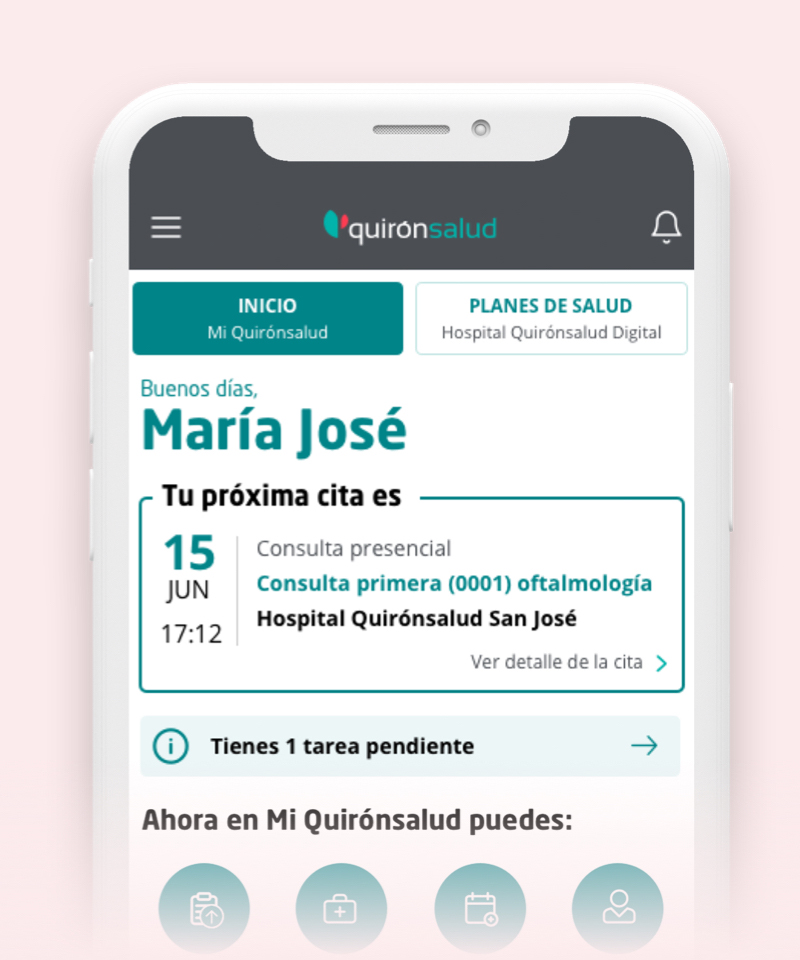
Accede a cualquier hora del día para cuidar tu salud y la de los tuyos.
Mi Quirónsalud es tu espacio personal privado y seguro en el que puedes solicitar y gestionar tus citas o consultar tus informes clínicos sin esperas ni desplazamientos.
¡Descúbrelo!