





CyberKnife Celebrates 20 Years at Hospital Ruber Internacional, a Pioneer in Robotic Radiosurgery in Spain
Two decades of experience in the non-invasive treatment of brain, spinal and thoracic tumours through stereotactic radiosurgery and radiotherapy
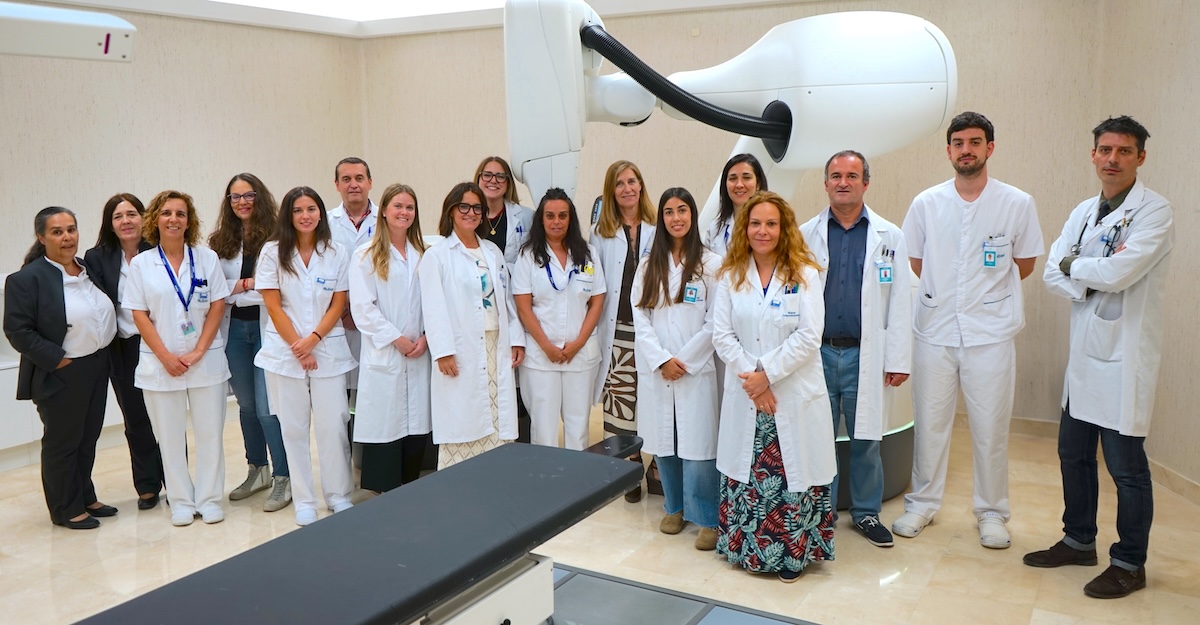
Hospital Ruber Internacional is celebrating the 20th anniversary of the installation of Spain’s first CyberKnife robotic radiosurgery system, a milestone that established the hospital as a pioneer of this technology in the country. Two decades later, the extensive experience gained by the multidisciplinary team led by Dr Aurora Rodríguez has helped establish radiosurgery and stereotactic radiotherapy as leading non-invasive treatment options for brain, spinal and thoracic tumours.
Over the past 20 years, thousands of patients have benefited from highly precise treatments capable of delivering high doses of radiation directly to the tumour while minimising exposure to the surrounding healthy tissue.
The arrival of CyberKnife in 2006 represented a major breakthrough in precision radiotherapy. This technology delivers ablative radiation doses to the therapeutic target with submillimetre accuracy, minimising irradiation of adjacent healthy structures. Treatment is performed on an outpatient basis, without surgery, anaesthesia or hospital admission, usually in a single session or a limited number of sessions.
"Over the past two decades, we have been able to offer highly effective and safe treatments to thousands of patients, tailoring each case to the characteristics of their disease and significantly improving their quality of life," says Dr Aurora Rodríguez, Head of the Radiation Oncology Department at Hospital Ruber Internacional.
The Central Nervous System: The Most Frequent Indication
Over the last 20 years, approximately 42% of patients treated with CyberKnife at Hospital Ruber Internacional have had conditions affecting the central nervous system, including both brain and spinal pathologies.
Dr Rafael García, radiation oncologist at the hospital, highlights the versatility of the system, which has enabled the treatment of a wide range of conditions, including malignant and benign brain tumours, paediatric tumours, spinal lesions, vascular malformations and functional disorders such as trigeminal neuralgia.
"The submillimetre precision of robotic radiosurgery is particularly important in these anatomical locations, where the proximity of critical neurological structures requires the highest level of accuracy in order to preserve neurological function and minimise side effects," explains Dr Aurora Rodríguez.
A Key Tool for Thoracic Tumours
Thoracic indications represent another of the most significant areas of development within the CyberKnife programme. Stereotactic Body Radiotherapy (SBRT) makes it possible to treat primary lung tumours and metastatic lesions in a limited number of sessions, typically between one and five.
"Thanks to the advanced respiratory tracking systems incorporated into the latest generations of CyberKnife, we can monitor tumour movement in real time during breathing, maintaining exceptional accuracy even in mobile organs such as the lungs. This capability enables us to deliver highly conformal treatments with low morbidity and excellent local disease control," explains Dr Amalia Sotoca, radiation oncologist and specialist in Stereotactic Body Radiotherapy (SBRT).
The experience accumulated at Hospital Ruber Internacional has resulted in high local control rates in both patients with oligometastatic disease and those with primary lung tumours, including selected cases of small cell lung carcinoma.
Furthermore, technological advances have significantly simplified treatment procedures. Today, only around 10% of patients require fiducial marker implantation for tumour tracking, making treatment more comfortable, faster and increasingly personalised.
Twenty Years of Experience, Innovation and Personalised Medicine
The installation of Spain’s first CyberKnife system in 2006 positioned Hospital Ruber Internacional as the national pioneer in robotic radiosurgery. The hospital subsequently reinforced its commitment to technological innovation with the incorporation of the CyberKnife M6 platform, which reduces treatment times and expands therapeutic indications thanks to advanced tracking and treatment planning systems.
Twenty years after the arrival of the first CyberKnife in Spain, the experience accumulated at Hospital Ruber Internacional confirms the essential role of radiosurgery and stereotactic body radiotherapy in the treatment of complex tumours. Technological progress and the growing expertise of clinical teams have expanded treatment indications while enabling increasingly precise, personalised and minimally invasive therapies for patients.
Quirónsalud: Technology That Makes the Difference in Patient Care
Quirónsalud’s commitment to technological innovation is based on a healthcare model that places patient well-being above all else. By viewing technology as the healthcare professional’s greatest ally, the Group continuously invests in the most advanced medical equipment to enable earlier diagnosis and minimally invasive treatments. This ongoing commitment strengthens precision medicine, improves patient safety, shortens recovery times and provides effective solutions to the challenges of modern healthcare.


