


Hospital Ruber Internacional specialists explain to female footballers how to plan for motherhood without giving up professional sport
Dr. Yosu Franco and Dr. Vega Cabezuelo took part in an informative session organised in collaboration with the Spanish Footballers’ Association (AFE), addressing egg freezing, fertility preservation and reproductive planning.
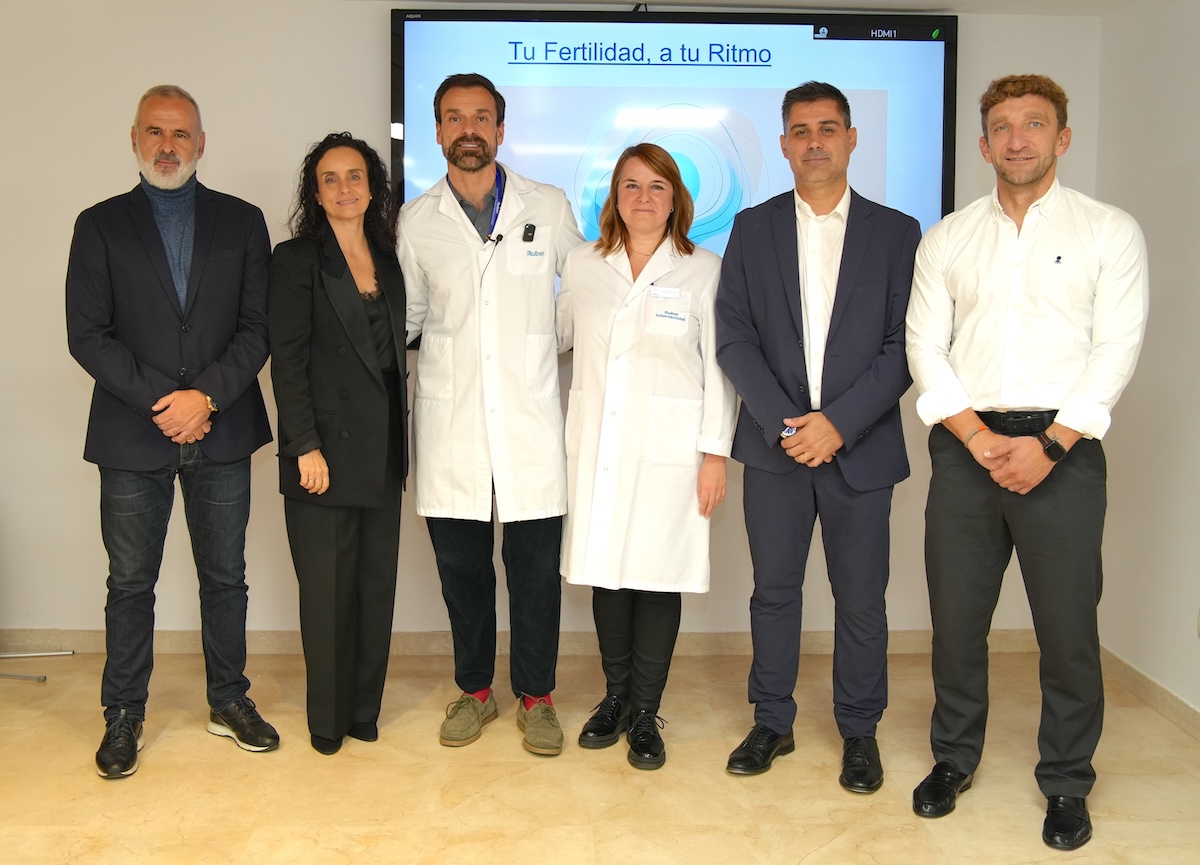
Hospital Ruber Internacional, part of the Quirónsalud Group, has participated in an informative session aimed at members of the Spanish Footballers’ Association (AFE) to discuss the importance of fertility preservation and provide information on the options available for planning motherhood during and after a professional sporting career.
The session featured Dr. Yosu Franco, Director of the Assisted Reproduction Laboratory at Hospital Ruber Internacional, and Dr. Vega Cabezuelo, a specialist in assisted reproduction. Both experts explained how age affects the chances of becoming pregnant and what options reproductive medicine currently offers women who wish to postpone motherhood.
The event was held as part of the collaboration agreement signed on 1 July between Hospital Ruber Internacional and AFE, which facilitates access to specialised reproductive medicine services for male and female footballers and their families.
Understanding fertility to make informed decisions
During his presentation, Dr. Yosu Franco explained that female fertility is closely linked to age, as both the number and quality of eggs progressively decline over time, particularly after the age of 35.
This biological reality is especially relevant for professional female athletes, whose competitive commitments, training schedules and personal aspirations may influence when they decide to consider motherhood.
In this regard, the specialist highlighted that egg vitrification allows reproductive cells to be preserved at the age at which the procedure is performed, with the possibility of using them in the future.
However, he emphasised that freezing eggs does not guarantee a future pregnancy, as the chances of success depend on factors such as the woman's age at the time of vitrification and the quality and number of eggs preserved.
Dr. Franco particularly stressed the importance of providing information from an early age so that every woman can make independent decisions, free from social, family or professional pressure.
Is egg freezing compatible with professional football?
One of the main topics discussed during the session was how to adapt fertility preservation treatment to the demands of competitive sport.
Dr. Vega Cabezuelo explained that the process begins with ovarian stimulation using hormonal medication for approximately 10–12 days, accompanied by ultrasound monitoring to assess follicular development. This is followed by egg retrieval, after which the eggs are vitrified and stored for potential future use.
The specialist pointed out that the procedure can be adapted to each patient's personal and professional circumstances, particularly in the case of female footballers who live outside Madrid or have difficulty travelling due to their sporting commitments.
Although normal daily activities can generally be maintained during the first few days of treatment, high-impact exercise and competitive sport must be restricted during the final stage of ovarian stimulation due to the enlargement of the ovaries and the risk of complications.
For this reason, the specialists recommended planning the procedure around the sporting calendar and considering undergoing treatment during rest periods or holidays, always under medical supervision.
A session to answer questions about fertility and motherhood
The event also provided an opportunity to address numerous questions related to reproductive health, including the most appropriate age for egg freezing, the tests available to assess ovarian reserve, the chances of pregnancy using vitrified eggs and the factors that may affect fertility.
Dr. Vega Cabezuelo highlighted the importance of an individualised assessment, as some young women may have a lower ovarian reserve than expected for their age.
The specialists from Hospital Ruber Internacional also explained that reproductive medicine extends beyond egg freezing. It can also help investigate potential difficulties in achieving pregnancy and offer different treatment options according to each patient's needs.
The main message of the session was the importance of understanding the available options before age may limit reproductive potential, without implying any obligation to undergo treatment.
An agreement to support footballers beyond the pitch
The session was also attended by David Aganzo, President of AFE, and Geni Martínez de las Heras, Head of the Association's Health Department, who highlighted the importance of expanding services aimed at supporting footballers' personal and family wellbeing.
The collaboration between AFE and Hospital Ruber Internacional enables affiliated male and female footballers, as well as family members covered by the agreement, to access specialised, personalised reproductive healthcare.
Available services include fertility preservation, artificial insemination, in vitro fertilisation (IVF), preimplantation genetic testing and other diagnostic techniques, as well as preferential conditions for egg vitrification.
This initiative reflects the shared objective of both organisations to bring reproductive medicine closer to the world of professional sport and provide footballers with the resources they need to look after their health and plan their family lives.
Through this event, Hospital Ruber Internacional and AFE have continued to develop a partnership that places information, medical guidance and freedom of choice at the heart of reproductive planning.