


Non-healing leg wounds may indicate underlying circulatory problems and require accurate diagnosis to prevent complications
Dr Pablo Gallo, Head of the Angiology and Vascular Surgery Unit at Ruber Internacional Hospital, explains how to distinguish between venous, arterial and mixed ulcers, their warning signs and why treatment must be tailored to each patient.
A wound that takes weeks to heal, repeatedly reopens or worsens despite wound care may be much more than a skin problem. In some cases, these lesions are caused by an underlying circulatory disorder that prevents tissues from receiving the blood supply they need to recover. Known as vascular ulcers, these wounds can persist for weeks or months, significantly affect quality of life and lead to complications if their underlying cause is not correctly identified.
"When a wound fails to heal, it is important not to focus solely on treating the lesion locally. We need to understand what is happening with the circulation, as this will largely determine the treatment and the chances of recovery," explains Dr Pablo Gallo González, Head of the Angiology and Vascular Surgery Unit at Ruber Internacional Hospital, part of the Quirónsalud Group.
Not all vascular ulcers are the same
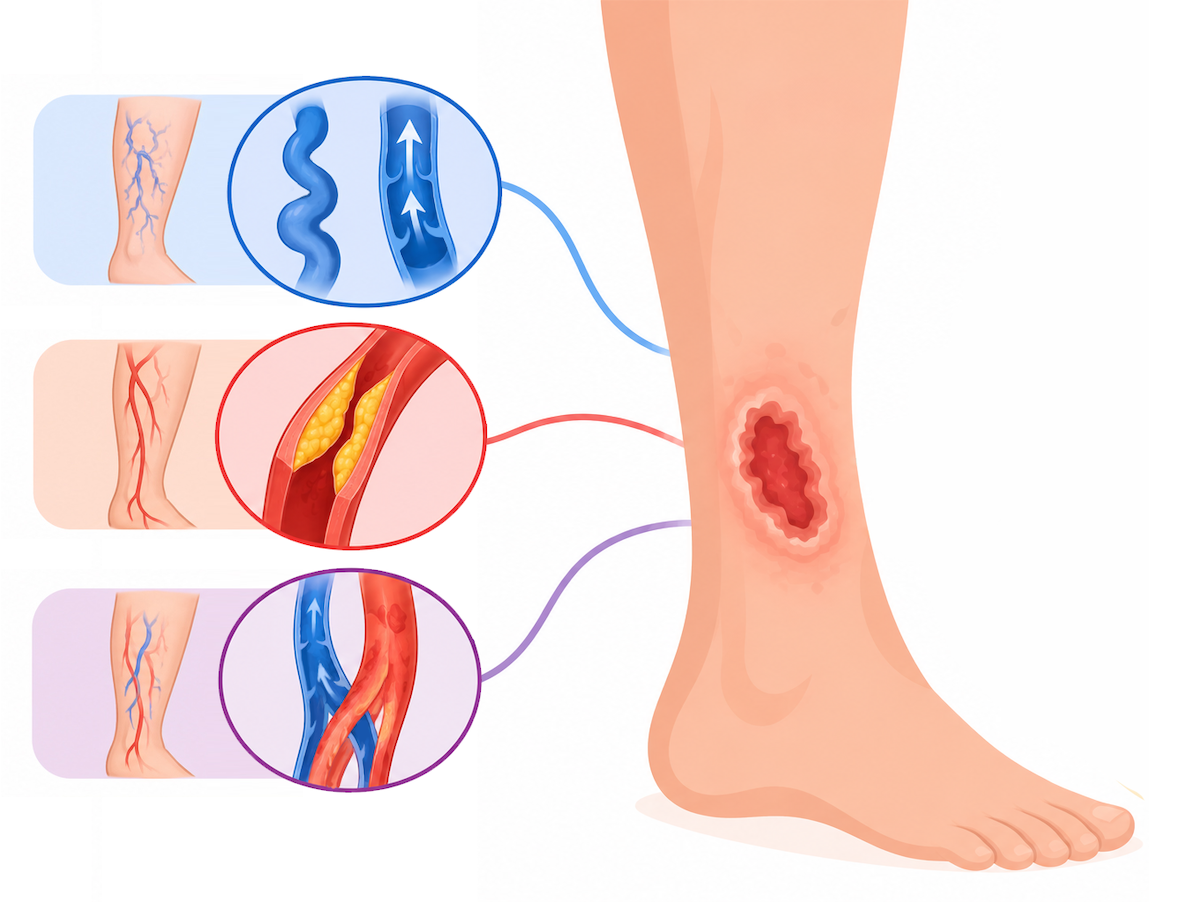
Although they may have a similar appearance, vascular ulcers have different causes and require specific treatment approaches. The most common types are classified into three main groups:
-
Venous ulcers: these develop when blood has difficulty returning from the legs to the heart. This condition, known as venous hypertension, can cause swelling, skin changes and, eventually, the development of wounds. These ulcers can occur as a complication of varicose veins and are a sign of longstanding venous insufficiency that has not been adequately treated.
-
Arterial ulcers: these occur when tissues do not receive enough oxygenated blood, usually as a result of peripheral arterial disease. Reduced blood flow impairs tissue repair and can lead to wounds that are particularly difficult to heal.
-
Mixed ulcers: these involve both venous and arterial disorders and therefore require particularly careful assessment before determining the most appropriate treatment.
According to the Head of the Angiology and Vascular Surgery Unit at Ruber Internacional Hospital, distinguishing between venous and arterial causes is essential. A measure that may benefit a patient with a venous ulcer, such as compression therapy, may be unsuitable or even harmful in the presence of significant arterial insufficiency.
What warning signs should we look out for?
Vascular ulcers may initially appear as small wounds, but certain symptoms should raise concern:
-
Wounds on the feet or legs that fail to heal or repeatedly reopen.
-
Visible varicose veins.
-
Persistent swelling of the ankles and legs.
-
Changes in skin colour or hardening of the skin.
-
Pain in the affected area, which may worsen when walking or elevating the leg in certain arterial conditions.
-
Cold feet, changes in colour or the appearance of lesions on the toes.
It is also important to pay attention to potential signs of infection, such as fever, progressive skin redness, increased local temperature, discharge or worsening pain.
"A wound that is not healing properly should be assessed by a healthcare professional. If severe pain develops suddenly, the foot becomes cold or pale, or the wound deteriorates rapidly, urgent medical attention is required," warns Dr Pablo Gallo.
Different treatments depending on the underlying cause
The first step in managing a vascular ulcer is to carry out an assessment to determine the condition of the patient's circulation and identify the underlying mechanism that is preventing healing.
 High resolution image. This link will open using lightbox, there may be a context switchFor venous ulcers, treatment usually combines local wound care with measures aimed at improving venous return. This may include compression therapy using bandages or specialised compression systems, provided that a vascular assessment confirms that it is safe. In selected patients, endovenous procedures may also be recommended to treat the underlying venous insufficiency and eliminate the varicose veins responsible for the ulcer. These minimally invasive treatments offer excellent recovery outcomes.
For arterial ulcers, the priority is to assess the severity of the reduced blood supply and determine how adequate blood flow can be restored. Depending on the characteristics of each case, treatment may involve medical management, endovascular techniques such as angioplasty, or vascular surgery to restore blood flow.
"There is no single treatment for all ulcers. Each case must be carefully assessed to understand the condition of the arteries and veins and establish an individualised treatment strategy. In arterial ulcers, improving blood supply can be crucial to giving the wound a chance to heal," explains the specialist.
In some cases, if these lesions progress, they may put the patient's limb at risk.
Local wound care also plays an important role. Wound care procedures and dressings help protect the affected area, control exudate and create suitable conditions for healing. If an infection is present, the specialist will assess the need for antibiotic treatment and adapt wound care accordingly.
Prevention is also part of treatment
Once the wound has healed, ongoing follow-up is important to reduce the risk of recurrence. Preventive measures include taking care of and moisturising the skin, regularly inspecting the feet and legs, maintaining an appropriate level of physical activity and avoiding prolonged periods of immobility.
Managing cardiovascular risk factors, such as smoking, diabetes, high blood pressure and cholesterol disorders, is also essential, as is following medical advice regarding medication, compression therapy and local wound care.
"Wound healing is a fundamental objective, but we must also address the underlying circulatory problem that caused it. If we fail to treat the cause of the ulcer, the wound may worsen and lead to complications that could ultimately put the limb at risk. Early detection and individualised follow-up are essential to improving outcomes and reducing the likelihood of recurrence," concludes Dr Pablo Gallo.