



Acne: Symptoms, Diagnosis, and Treatment
Dr. José Luis Ramírez Bellver, dermatologist specializing in acne, rosacea, and scar treatment, discusses acne— a common skin condition that affects people of all races and ages, although it is more frequent in adolescents and young adults.
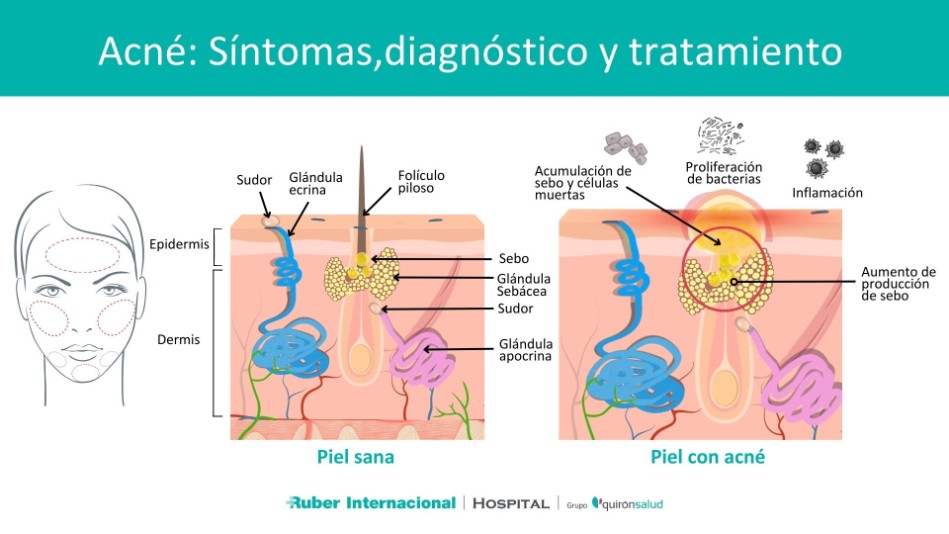
Acne is a very common inflammatory disorder of the pilosebaceous unit, generally affecting adolescents and young women. Although several factors play a role (stress, diet, topical products used, etc.), the most important is the hormonal factor. This is considered "physiological" during adolescence (acne vulgaris), but if it persists into adulthood (late-onset acne), hormonal regulation may be necessary for successful treatment.
What are the most common symptoms?
Acne presents in different clinical forms, and it is common for several types of lesions to appear in the same patient. There may be open comedones (blackheads) and closed comedones (whiteheads), along with raised, red, or pus-filled lesions (papules and pustules).
In severe acne, deeper lesions such as nodules and cysts may develop. The most commonly affected areas are the forehead and cheeks in acne vulgaris, and the lower cheeks and jawline in adult female acne. Lesions may also appear on the chest and back.
How is it diagnosed?
Diagnosis is clinical, meaning that a thorough medical history and physical examination are sufficient to establish the diagnosis. It is important to consult a specialist to differentiate acne from other conditions that may require different treatments, such as rosacea, angiofibromas, or sebaceous hyperplasia, among others.
What is the treatment?
Treatment depends on several factors: severity of acne, presence or absence of scarring, patient preferences, plans for pregnancy, and others.
In general, mild acne is treated with topical therapy, while moderate or severe acne may require oral treatment (vitamin A derivatives, antibiotics, probiotics, antiandrogens, etc.), in addition to specific skin care measures.
 This link opens in a popup window