





Alzheimer’s Disease: Definition, Symptoms, Diagnosis, and Treatment
Dr. Víctor Antonio Blanco Palmero, Neurologist specializing in Alzheimer’s disease and other cognitive disorders at the Neurology Unit of Hospital Ruber Internacional, explains the symptoms, diagnosis, and treatment of this neurodegenerative disease.
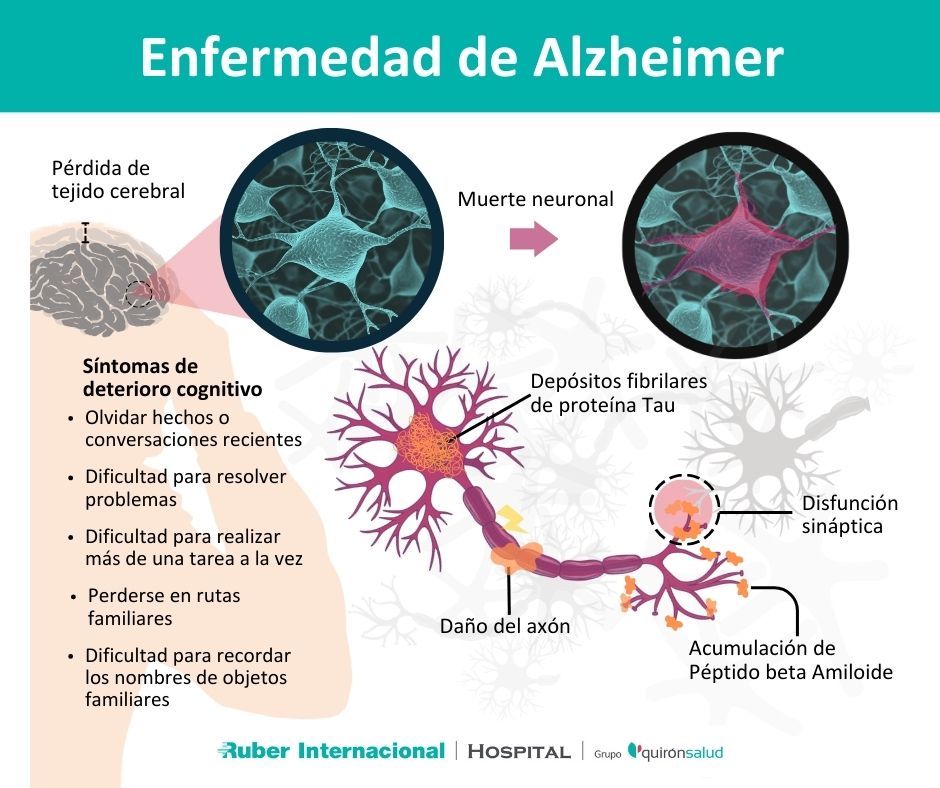
Alzheimer’s disease is a neurodegenerative disorder characterized by progressive deterioration of cognitive abilities (memory, language, reasoning, behavior, etc.). When the decline becomes severe enough to interfere with daily life, it is referred to as "dementia." Alzheimer’s disease is the most common cause of dementia (60–80% of cases), although other conditions can also lead to dementia (Lewy body dementia, vascular dementia, frontotemporal dementia, etc.).
The changes that occur in the brain of a person with Alzheimer’s disease mainly involve the accumulation of two proteins: beta-amyloid and tau. This buildup leads to the destruction of connections between neurons and, ultimately, neuronal loss (neurodegeneration).
The causes of Alzheimer’s disease are only partially understood. They are likely multiple and varied, resulting from a combination of genetic factors (notably the APOE gene) and modifiable factors (hypertension, diabetes, obesity, sedentary lifestyle, alcohol and tobacco use, social isolation, etc.).

What Are the Most Common Symptoms?
Most people with Alzheimer’s disease develop symptoms after the age of 65, although they may appear earlier.
The most common initial symptom is memory loss, particularly for recent events. There is difficulty remembering new information, and patients may repeatedly ask the same questions, forget appointments, events, and conversations, or confuse events that occurred days or weeks earlier. Over time, symptoms become more severe, and patients may also experience difficulty navigating familiar places, reasoning, or performing tasks they previously managed independently (handling finances, following a recipe, taking medication, etc.).
In some cases, Alzheimer’s disease may present with language problems (difficulty finding common words, speech blocks), visuospatial difficulties (trouble recognizing objects, driving, or orienting themselves), or behavioral changes (apathy, irritability, social disinhibition, etc.).
As the disease progresses, all cognitive functions eventually become affected, and patients require increasing assistance, even with basic daily activities.
How Is It Diagnosed?
The diagnosis of Alzheimer’s disease is primarily based on clinical evaluation. A detailed medical history is essential, documenting which symptoms have appeared and in what order, what medications the patient is taking, and the patient’s personal and family history. A cognitive examination or comprehensive neuropsychological assessment is also crucial to determine which cognitive functions are impaired, the severity of impairment, and how it impacts daily life.
Additional tests can help increase diagnostic confidence and rule out other conditions. The most commonly used include neuroimaging techniques (magnetic resonance imaging [MRI] and computed tomography [CT]), nuclear medicine techniques (positron emission tomography [PET]), and cerebrospinal fluid biomarkers. The latter can detect abnormal accumulation of beta-amyloid and tau proteins.
What Is the Treatment?
Currently, there is no medication capable of curing or definitively stopping the progression of Alzheimer’s disease. However, certain drugs can temporarily slow symptom progression and improve quality of life for patients and their families. The most commonly used medications are acetylcholinesterase inhibitors (donepezil, rivastigmine, galantamine) and memantine.
At the end of 2022, results were announced from a clinical trial of the drug lecanemab, which may help slow progression in patients with mild Alzheimer’s disease. Its final approval is currently under evaluation by the European Medicines Agency.
Non-pharmacological measures are also important. These include controlling vascular risk factors, engaging in physical exercise programs, participating in cognitive rehabilitation therapies, and maintaining social and intellectual activity.
 This link opens in a popup window