





Hyperhidrosis
A sweating disorder that affects approximately 3% of the general population.
Hyperhidrosis is a sweating disorder characterized by excessive sweat production that is not necessarily triggered by exposure to a hot environment, intense physical activity, or situations of deep stress.
This profuse sweating may occur unpredictably. People with hyperhidrosis sweat excessively even when the temperature is cool or when they are at rest. This condition causes discomfort, interferes with daily activities, produces anxiety, and may lead to embarrassment or social withdrawal.
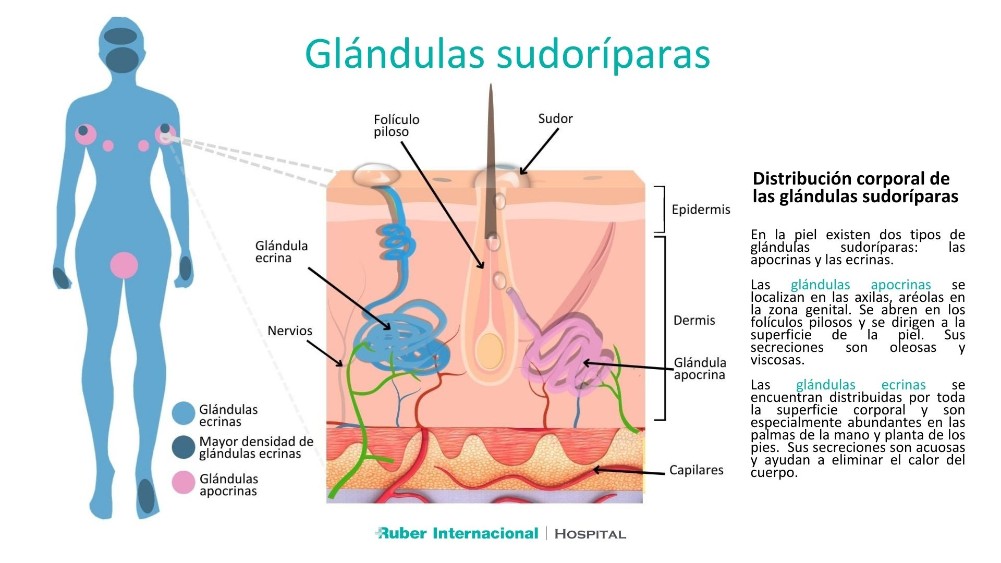
Hyperhidrosis can occur in different areas of the body. It most commonly affects the hands (palmar), armpits (axillary), face (facial), and soles of the feet (plantar).
From a medical standpoint, it is classified as primary or secondary hyperhidrosis.
Primary (Focal) Hyperhidrosis:
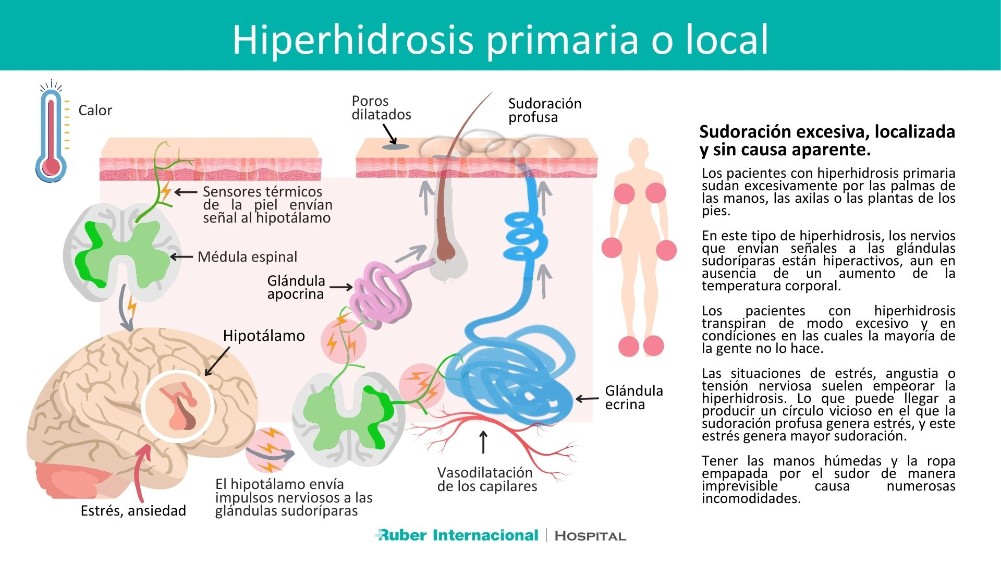
Primary hyperhidrosis is the most common form and affects only certain parts of the body, especially the armpits, feet, hands, and face. It is not directly related to external temperature—whether hot or cold—and, interestingly, it usually disappears during sleep.
Approximately 2–3% of the population suffers from focal hyperhidrosis, which occurs independently of other medical conditions and typically begins in childhood or adolescence. There is no identifiable medical cause for this type of hyperhidrosis. It may have a hereditary component, as it often runs in families.
In this type of hyperhidrosis, the nerves responsible for sending signals to the sweat glands become overactive, leading to the production and excretion of abnormally large amounts of sweat. Stress, anxiety, or pain can worsen the condition.
Secondary Hyperhidrosis:
This type of excessive sweating occurs as a consequence of an underlying medical condition (such as diabetes, hyperthyroidism, obesity, etc.) or as a side effect of medications or dietary supplements. The sweating is more generalized and usually affects the entire body. Unlike primary focal hyperhidrosis, excessive sweating may also occur during sleep. It is less common than primary hyperhidrosis.
Diagnosis of Hyperhidrosis
The diagnosis of excessive sweating begins with an initial consultation and clinical examination performed by a dermatologist. Based on clinical findings and relevant personal and family history, laboratory tests may sometimes be requested to identify a possible underlying cause of hyperhidrosis.
Sweat Test
Dermatologists often perform skin tests to confirm the location of sweating, semi-quantitatively assess its intensity, or monitor its progression after treatment.
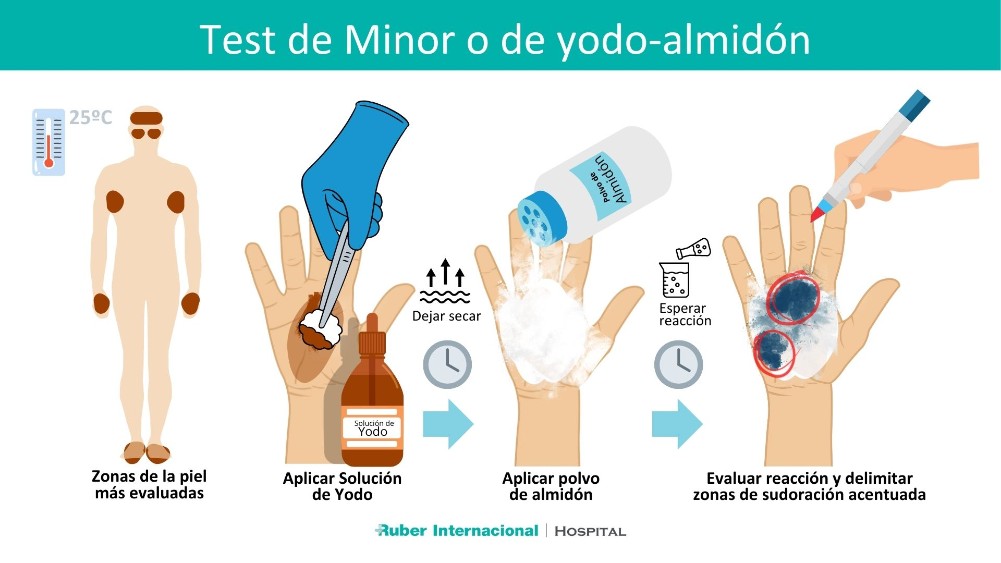
The most commonly used method in clinical practice is the Minor test, also known as the iodine-starch test. This is a simple procedure in which an iodine solution is applied to the area of skin being evaluated and allowed to dry. Cornstarch is then sprinkled over the area, and the clinician waits for sweating to occur. When sweating happens, the starch becomes moist and reacts with the iodine, turning a dark blue color. This makes it easier to visualize and define the areas of greatest sweating.
There are various treatment options available for hyperhidrosis. A dermatologist will recommend the most appropriate treatment based on its origin (primary or secondary), location (axillary, plantar, etc.), severity, and the individual characteristics and expectations of each patient.
In cases of secondary hyperhidrosis, the underlying condition must first be treated, which may sometimes require the involvement of a multidisciplinary medical team.