





Migraine: Definition, Symptoms, Diagnosis, and Treatment
Dr. Elena Riva Amarante, a neurologist specialized in headaches, cerebrovascular disease, and neuro-rehabilitation at the Neurology Unit of Hospital Ruber Internacional, discusses this neurological condition characterized by recurrent episodes of intense headache.
Migraine is a neurological disease of genetic origin that, among other symptoms, causes recurrent episodes of moderate to severe headache (cephalgia). These episodes can be highly disabling, significantly affecting personal, family, social, and professional life. Migraine is the third most common neurological disease worldwide and the second leading cause of disability among all diseases. It affects approximately 1 in 7 people (14% of the global population) and is more common in women (19% of women vs. 10% of men).
In Spain, the typical patient profile is a middle-aged woman (20–50 years old), often in the midst of family and professional responsibilities. More than 40% of migraine patients have relatives with the same condition, although they are frequently undiagnosed. It is estimated that in Spain, individuals with migraine may wait more than six years before receiving an accurate diagnosis and appropriate treatment.
There are three types of migraine: migraine without aura, migraine with aura, and chronic migraine.

What Are the Most Common Symptoms?
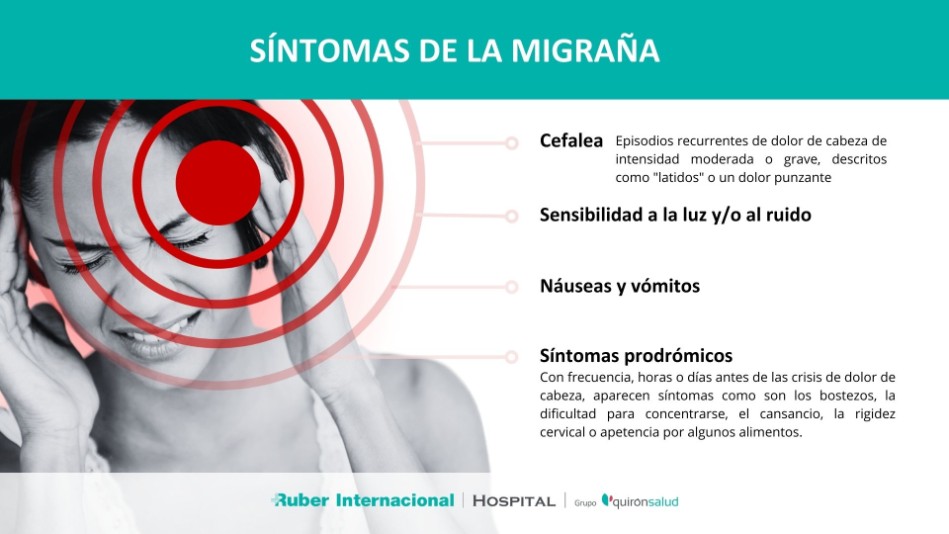
Migraine presents with recurrent episodes of pain that usually affect one side of the head, often described as throbbing, with moderate to severe intensity, lasting from a few hours up to three days. The pain worsens with physical activity and may be accompanied by symptoms such as increased sensitivity to light and/or noise, nausea, and vomiting. As a result, patients often prefer to lie down in a dark, quiet environment.
Hours or days before the headache begins, prodromal symptoms may appear, such as yawning, difficulty concentrating, fatigue, neck stiffness, or food cravings. After the headache resolves, similar symptoms may persist for hours or days.
Migraine with aura involves temporary neurological symptoms that precede the headache, such as visual disturbances, difficulty speaking, or transient numbness in the face or limbs.
In chronic migraine, headaches occur very frequently—more than 14 days per month.
How Is Migraine Diagnosed?
The most important tools for diagnosing migraine are medical history and physical examination. The diagnosis is clinical, based on the symptoms described by the patient (e.g., characteristics and location of the pain), medical and family history, and a neurological examination that shows no abnormalities.
In certain cases, additional tests are necessary to rule out other causes. Blood tests, brain imaging (mainly MRI), lumbar puncture, or Doppler ultrasound of the supra-aortic trunks may be indicated in patients with atypical headaches, risk factors (e.g., coagulation disorders, systemic tumors, infections), or abnormal neurological findings.
Migraine is an underdiagnosed condition, and since diagnosis is clinical, it is important that patients are evaluated by professionals experienced in managing this disorder.
What Is the Treatment?
Treatment is based on three main pillars:
1. Patient education:
Patients should understand the disease, adopt healthy lifestyle habits, and identify triggers that may provoke attacks. Triggers are grouped into six categories:
- Dietary: Excess or withdrawal of caffeine, nitrite-rich foods, alcohol, fasting
- Environmental: Weather changes, odors, visual stimuli
- Medications
- Hormonal: Menstruation, contraceptives
- Psychological: Anxiety, stress
- Sleep-related: Sleep deprivation or excessive sleep
2. Symptomatic treatment:
Used to control pain episodes.
- For mild to moderate migraines: NSAIDs (ibuprofen, naproxen, dexketoprofen).
- For more severe attacks: triptans.
Triptans can be administered orally, sublingually, nasally, or subcutaneously, especially in patients who experience vomiting during attacks. In cases resistant to these treatments, anesthetic nerve blocks of pericranial nerves may be performed.
3. Preventive treatment:
Aims to reduce the frequency and intensity of attacks. It is indicated in patients with four or more episodes per month, prolonged attacks, or those resistant to symptomatic treatment. Preventive options include oral medications, botulinum toxin injections, and monoclonal antibodies targeting CGRP or its receptor.
 This link opens in a popup window