





Psoriasis
Psoriasis is an inflammatory disease that affects the skin. It is characterized by reddish, scaly, slightly raised lesions with well-defined borders. Although they can appear anywhere on the body, including the mucous membranes and nails, they most commonly affect the skin of the elbows, knees, and scalp.
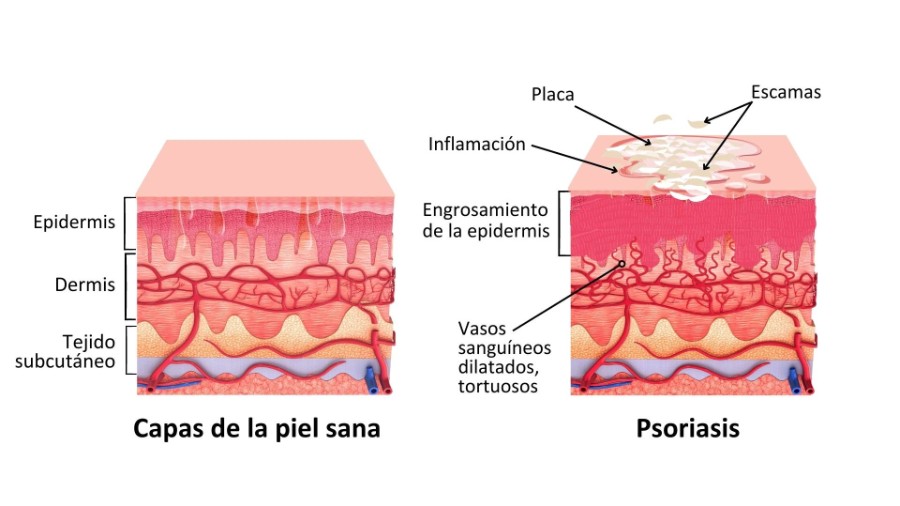

Causes
The exact cause of psoriasis is not fully understood, but it appears to result from an accelerated renewal process of skin cells triggered by immunological factors.
Under normal conditions, cells in the outermost layer of the skin (epidermis) renew themselves approximately every four weeks. In people with psoriasis, this renewal process can occur in just a few days, leading to a buildup of skin cells in the form of plaques covered with whitish scales. Inflammation and redness around the scales are common.
Genetic factors seem to play a role in its development. Environmental factors such as stress, intense emotional events, infections, and the use of medications such as anti-inflammatory drugs, beta-blockers, or antimalarials may trigger occasional psoriasis flare-ups.
Although there are different levels of severity and extent, psoriasis usually has a significant impact on the patient’s well-being.

Symptoms
Although it can appear at any age, most patients experience their first flare-ups between the ages of 15 and 35. Lesions typically present as variable-sized, reddened patches covered with whitish scales of varying thickness, clearly defined, and frequently located on the elbows, knees, scalp, and sacral region, although they can affect any other part of the body.
These lesions may itch, hurt, and sometimes crack and bleed.
In addition to skin lesions or joint involvement (psoriatic arthritis), some patients may also have overweight or obesity, high blood glucose levels, and high cholesterol, a combination known as metabolic syndrome. This highlights the importance of evaluating patients with psoriasis in a comprehensive manner and treating them in specialized multidisciplinary units.

Diagnosis
Psoriasis is usually diagnosed based on the clinical appearance and distribution of the lesions, which are very characteristic. Clinical evaluation is often sufficient, although additional tests may sometimes be required. For diagnosis and treatment, patients should consult a dermatologist.
Psoriasis occurs in flare-ups and should be diagnosed as early as possible to help control and space out episodes, improving the patient’s quality of life.
The involvement of different medical specialties in the diagnosis and treatment of the disease is very important, as psoriasis is not limited to the skin. If necessary, patients may need evaluation by other specialists, such as an endocrinologist in cases of metabolic disorders, or a psychologist if the disease significantly affects the patient’s psychosocial life.

Treatment
Despite advances in treatment, there is currently no definitive cure. The goal of treatment is to keep the skin free of lesions for as long as possible—often referred to as "clearing the lesions"—or to achieve remission.
The choice of treatment depends on the severity of the disease, the person’s lifestyle, existing medical conditions, age, and personal preferences.
Experience shows that combining different therapies—such as immunotherapy along with biological treatments, supported by phototherapy sessions using narrowband UVB radiation—greatly helps control the disease.
How Does Lifestyle Affect Flare Control?
Stress levels and quality of life directly influence disease control. Specialists recommend managing stress, maintaining healthy lifestyle habits such as a balanced diet, eliminating harmful habits like smoking or alcohol consumption, and exercising regularly to help control the disease and improve quality of life.