




Skin Cancer: definition, symptoms, diagnosis, and treatment
Dr. Pedro Rodríguez Jiménez, a dermatologist specializing in Oncology and Dermatologic Surgery, and Coordinator of the Melanoma and Skin Cancer Unit at Hospital Ruber Internacional, talks to us about this disease, which originates when some skin cells begin to multiply uncontrollably and form cellular masses or tumors.
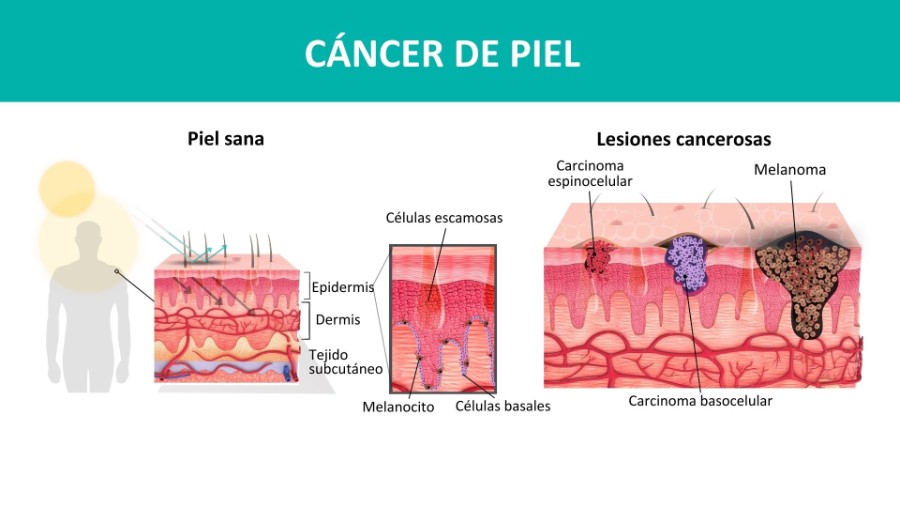
Skin cancer is the most common cancer in our body. Basically, there are two types of skin cancer: carcinoma (which can be basal cell or squamous cell) and melanoma.
Carcinomas or epitheliomas are the most common, less aggressive, and rarely metastasize; that is, they usually do not affect other organs such as the brain or liver. Fortunately, melanomas are less common, but they are much more aggressive and can metastasize easily if they are not removed in time.
The data is alarming: four out of ten Spaniards will develop skin cancer. Each year, the incidence of skin cancer in Spain increases by 10 percent, and a total of seventy-eight thousand new cases are diagnosed. Of these, nearly 90 percent correspond to non-melanoma skin cancer, that is, the epithelioma type. This type of non-melanoma skin cancer develops in the outermost layer of the skin, and the most important risk factor is chronic and prolonged exposure to ultraviolet radiation from the sun. Melanoma is more commonly associated with intermittent, periodic sun exposure that results in sunburn.
What are the most common symptoms?
In the case of melanoma, it is usually asymptomatic; it does not cause pain or itching and typically appears as a mole that changes.
In the case of carcinomas or epitheliomas, they usually begin as a small wound that does not heal; sometimes they may also resemble a "pimple or wart" that grows.
How is it diagnosed?
Diagnosis is made during a consultation through visual physical examination with the help of a manual or digital dermatoscope. Sometimes mole-mapping systems are used to better monitor patients with many moles.
In case of doubt, before carrying out treatment, it is always advisable to perform a diagnostic biopsy in the office. This usually requires removing a small area for microscopic examination and closing the wound with 1–2 stitches.
 This link opens in a popup window
What is the treatment?
Good news: more than 95 percent of skin cancers are cured if diagnosed early, most often with conventional surgery, sometimes with Mohs surgery, and in selected areas we may use other non-surgical treatments.
The message we must convey is that early diagnosis remains the best treatment for skin cancer; therefore, the most important thing is regular self-examination and attending periodic check-ups.