


Innovation in reproductive medicine takes centre stage at the 2nd Assisted Reproduction Symposium at Ruber Internacional Hospital
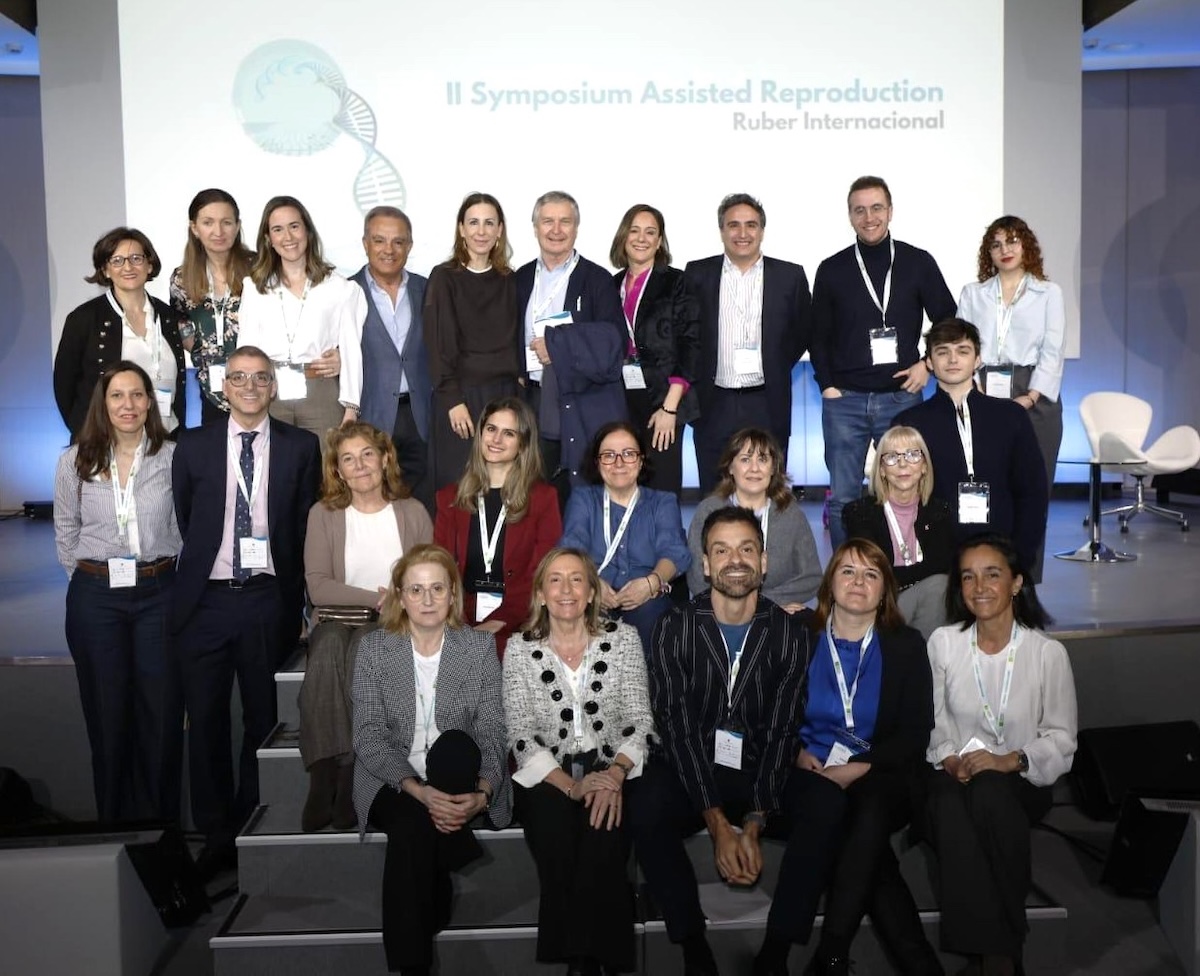
Recently, Hospital Ruber Internacional hosted the II Symposium on Assisted Reproduction, a pioneering meeting in Spain that brought together national and international specialists in reproductive gynecology, embryology, immunology, reproductive genetics, and andrology to share scientific advances and clinical experience.
Over two days, around thirty experts—including members of the hospital’s Assisted Reproduction Unit and professionals from international research centers—took part in lectures and round-table discussions that connected research with clinical practice.
The program was structured into five scientific sessions focused on innovation in reproductive medicine. Among the topics discussed were advances in animal models, new technologies, how to optimize assisted reproduction cycles, oocyte and embryo vitrification, and in vitro maturation of oocytes, which "open the door to more patient-friendly and simpler treatments," explained Dr. Elena Carrillo de Albornoz, Medical Director of the Assisted Reproduction Unit at Hospital Ruber Internacional and member of the organizing committee.
Special attention was also given to genetics and the study of the male factor. "Normally semen is not studied in such depth, but we are seeing that it has significant value because 50% of an embryo comes from the sperm, so it also needs to be studied," said Dr. Yosu Franco, Scientific Director of the hospital’s assisted reproduction laboratory.
Science and clinical innovation
The meeting began with a session dedicated to new experimental models and advances in genetics which, according to Dr. Silvia Iniesta, gynecologist at Hospital Ruber Internacional and moderator together with Dr. Joaquín Llácer, Vice President of the Spanish Fertility Society, "are redefining the understanding of implantation and human reproduction."
Among the innovations analyzed were PGT-P, a preimplantation genetic test that estimates the polygenic risk of multifactorial diseases, and gene editing. "Although many of these strategies are not yet part of clinical practice, they allow us to anticipate where the specialty is heading," said Dr. Lluís Montoliu, scientific researcher at the Spanish National Research Council (CSIC).
The second round table, moderated by Dr. Enrique Pérez de la Blanca from the Reproduction Unit at Hospital Quirónsalud Málaga and Dr. Moisés Moreira from Unidad Segrelles Coruña, focused on how to improve assisted reproduction cycles. Dr. Juan José Guillén from EUGIN Barcelona analyzed different strategies to prevent the ovulatory surge using antagonists versus progesterone. Dr. Marta Devesa, Head of the Reproduction Department at Dexeus, reviewed strategies to improve ovarian response and oocyte quality in patients with poor response. Dr. García Velasco, Scientific Director of IVIRMA Global, addressed the importance of biochemical pregnancy after assisted reproduction techniques, analyzing its pathophysiology, clinical significance, and management strategies.
During the same session, Dr. Eduardo de la Fuente, clinical immunologist at Hospital Ruber Internacional, discussed the role of the immune system in assisted reproduction. "This is a very complex process in which multiple mechanisms of the body interact. The immune system also plays an important role from embryo implantation to the maintenance of pregnancy," he explained. In patients with recurrent miscarriage or repeated implantation failure, he added, immunological alterations have been detected "in a very high percentage of cases, with treatments showing high success rates."
Improving reproductive techniques
In the field of genetics, specialists pointed out that advances in sequencing allow embryos that were previously discarded to be re-evaluated. "What was once thought to be an abnormality is sometimes not, which allows more embryos to potentially be transferred," said Dr. Yosu Franco.
The round table Optimization and Improvement of Techniques, moderated by embryologist Amelia Villa and Drs. Elena Meliá and Daniel Ordóñez from Hospital Ruber Internacional, analyzed some of the main current challenges. Dr. Francesca Spinella, a molecular biologist specializing in medical genetics and oncology, discussed advances in preimplantation genetic diagnosis and the role of mosaicism. "Increasingly, it is being observed that many of these embryos can be transferred to the uterus and result in healthy babies," she explained.
Meanwhile, Dr. Laura Girardi, Head of Scientific Support for Genetic Services, EMEIA, analyzed segmental chromosomal abnormalities, which in some cases may also be transferable.
In the field of ultravitrification, Dr. Juergen Liebermann, Director of Laboratory Services at Fertility Centers of Illinois, highlighted that this technique saves time in laboratories and reduces the exposure of embryos and oocytes to certain substances. "The techniques are usually lengthy and involve a heavy workload, so this type of procedure can represent a significant improvement," he noted.
In vitro maturation is another emerging research line. "If we can mature immature eggs with the same efficiency as those obtained from the ovary, it will change the perspective of reproduction," explained Dr. Yosu Franco, Scientific Director of the Assisted Reproduction Laboratory at Hospital Ruber Internacional.
In this area, Dr. María José Escribá, embryologist and researcher in Human Reproduction at IVI Clinic in Valencia, and Dr. Luis Guzmán, Director of PRANOR laboratories, presented new research. "In vitro maturation of gametes represents an increasingly promising alternative. Although protocols are still being optimized, current results show that it may expand options for patients who do not respond well to conventional ovarian stimulation," said Dr. Guzmán.
Microplastics and fertility
Drs. Alfonso Bermejo and Vega Cabezuelo, from the Madrid hospital organizing the congress, moderated a lecture on the possible impact of micronanoplastics on reproductive health, delivered by molecular immunologist Claudio Fenizia.
"Every time we use a plastic plate or heat a container in the microwave we ingest small amounts of microplastics," explained Dr. Bermejo. Recent studies have detected these particles in semen and follicular fluid, although their long-term impact is still unknown.
Dr. Cabezuelo noted that these contaminants can enter the body through the air, food, or skin and may act as endocrine disruptors. "Research is underway on the potential harm they may have on pregnancy progression and the future health of the baby." According to experts, micronanoplastics have already been detected in placentas, in vitro cells, testicles, ovaries, and even breast milk. "This is one of the first times these issues have been discussed at a fertility congress because it is something relatively new," emphasized Dr. Bermejo.
Uterine controversies
The session The Functional Uterus: From Structure to Dynamics, moderated by Drs. Beatriz Bueno and Ana Vegas, gynecologists at Hospital Ruber Internacional, addressed highly controversial issues such as the treatment of fibroids in assisted reproduction.
Dr. José Antonio Domínguez, Medical Director of IERA Quirónsalud Badajoz, analyzed when surgical intervention is recommended. "Fibroids are a very common pathology, and there is controversy about whether surgery should be performed before or after reproductive treatment." He also analyzed the different types of fibroids and the importance of their relationship with uterine cavity involvement and fibroid size. He also proposed new medical and interventional strategies, including radiofrequency treatment for certain fibroids.
Dr. Belén Moliner, from Instituto Bernabéu in Alicante, discussed the role of endometrial peristalsis and the importance of assessing it at the time of embryo transfer. Meanwhile, Drs. Luis Alonso, from the Hysteroscopy Unit at Hospital Quirónsalud Málaga, and Antonio Gosálvez, from the Fertility Unit at Quirónsalud Madrid, held an interesting debate analyzing the dysmorphic uterus, pathologies whose surgical indication continues to generate debate.
The male factor
The final session, dedicated to andrology, was moderated by Drs. Santiago Bau, from Hospital Ruber Internacional, and Miguel Ruiz, Director of CREA Medical Center in Valencia, and analyzed the role of the male factor in assisted reproduction.
Among the highlighted innovations is microfluidic sperm selection, which "will allow the selection of higher-quality sperm and improve in vitro fertilization outcomes," explained Dr. Bau. The session also addressed the impact of obesity on the male factor and the potential benefits of treatments with GLP-1 agonists.
Dr. Miguel Ruiz also highlighted the importance of paternal genetics in reproductive processes, as it may help explain both fertilization failures and implantation failures.
Other renowned specialists in reproduction such as Drs. Samuel Ojosnegros, Nuno Costa-Borges, Minerva Ferrer, Arantxa Cardona, Xavier Vendrell, and Gema Casals, among others, participated in various scientific sessions that addressed topics such as the new model of implantation, microfluidics—present, future, and clinical results—the impact of male genetic alterations on fertilization failure and findings in testicular biopsy, paternal genetic regulation of early human development during the preimplantation stage, and obesity and male infertility in the era of GLP-1 therapies.
Health Content
Health Content
- March 16, 2026
Innovation in reproductive medicine takes centre stage at the 2nd Assisted Reproduction Symposium at...
The hospital is bringing together leading national and international experts in Madrid for the 2nd Assisted Reproduction Symposium.Hospital Ruber Internacionalen/health-centers/hospital-quironsalud-ruber-internacional - 16 de marzo de 2026
Los beneficios de la cirugía robótica para tratar la endometriosis profunda y preservar la fertilidad
El ginecólogo Jaime Siegrist, del Hospital Universitario La Luz, extirpa quistes ováricos bilaterales y múltiples lesiones de endometriosis mediante el robot Da Vinci Xi en u...Hospital Universitario La Luzen/health-centers/hospital-universitario-la-luzGinecología y Obstetriciaen/specialities/ginecologia-obstetricia - 13 de marzo de 2026
La educación maternal mejora la experiencia del embarazo, parto y postparto
• Un programa eficaz de preparación al parto permite que las futuras mamás puedan prepararse para el alumbramiento comprendiendo mejor los cambios de su cuerpo, conozcan las ...Hospital Quirónsalud Campo de Gibraltaren/health-centers/hospital-quironsalud-campo-gibraltarGinecología y Obstetriciaen/specialities/ginecologia-obstetricia