



Robotic surgery expands treatment options for gynaecological cancer and deep endometriosis
Hospital Ruber Internacional introduces the Da Vinci Xi system into its Gynaecology Department for the first time, enabling highly complex procedures to be performed with greater precision and a minimally invasive approach.
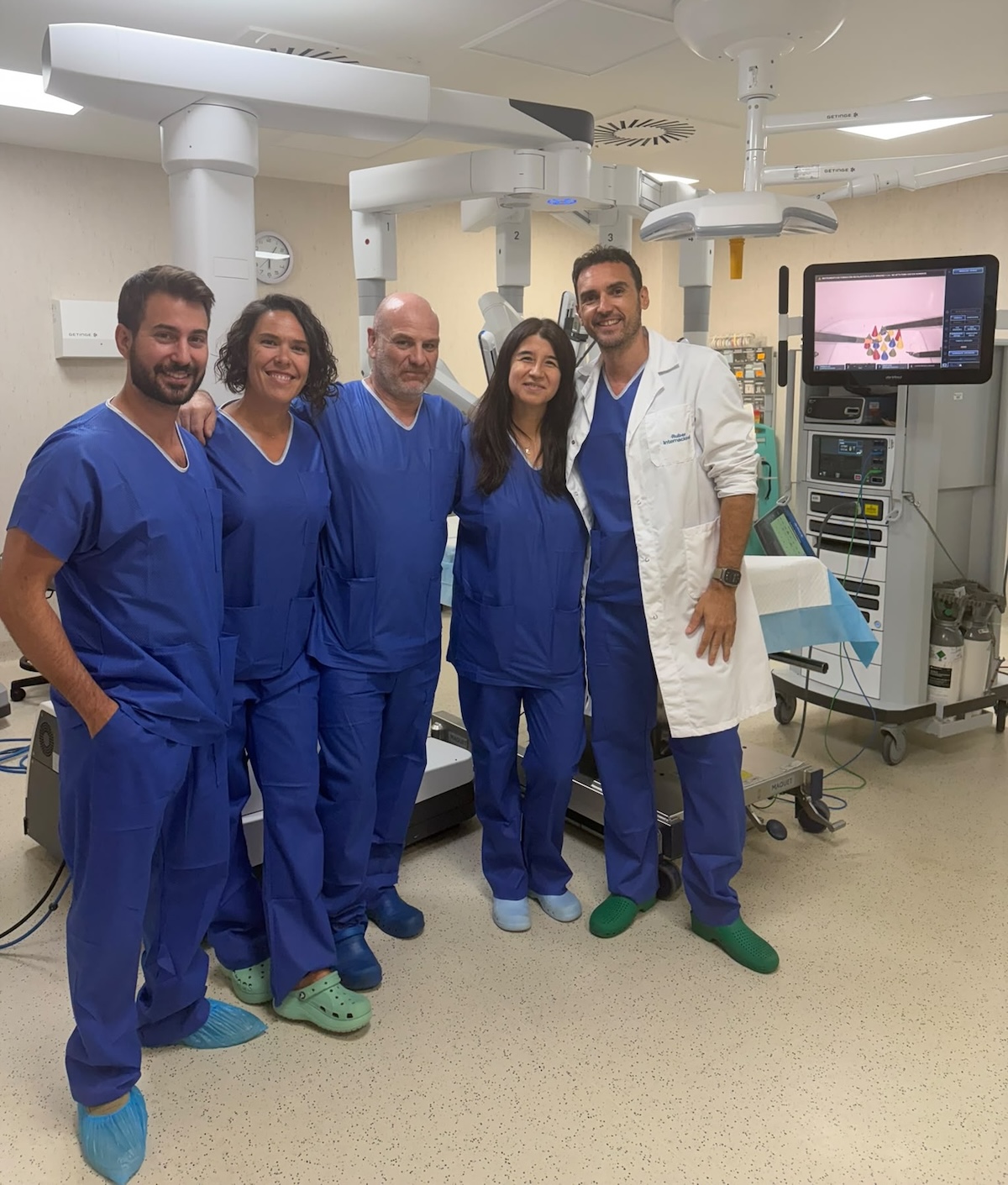
Surgery for certain gynaecological tumours and conditions such as deep pelvic endometriosis can involve particularly complex procedures due to the location of the lesions and their proximity to anatomical structures such as the bladder, ureters, rectum or major blood vessels.
In this context, minimally invasive surgery and, in particular, robot-assisted surgery have expanded the possibilities for performing highly complex procedures with a high degree of surgical precision.
Hospital Ruber Internacional, part of the Quirónsalud Group, is now introducing highly complex robotic surgery into its Gynaecology Department for the first time, with the launch of a programme focused particularly on the surgical treatment of gynaecological cancers, deep pelvic endometriosis and other complex gynaecological conditions.
The project is being developed by a gynaecology team at Hospital Ruber Internacional, led by Dr Fermín Esteban Navarro and Dr Álvaro Martínez Acera, with the addition of Dr Álvaro Tejerizo, a specialist in gynaecological oncology, endoscopic and robotic surgery. The medical team also includes Dr Jon Díez Alcántara.
"The introduction of robotic surgery allows us to expand the surgical options we can offer patients with complex gynaecological conditions, selecting the most appropriate technique in each case according to the disease, its extent and the individual characteristics of each woman," explains Dr Fermín Esteban Navarro.
Greater precision in complex gynaecological procedures
The programme will use the Da Vinci Xi robotic system, a technology that allows the surgeon to operate from a console, controlling the instruments introduced into the surgical field.
Its main features include an enhanced three-dimensional view of the surgical field, highly precise movements and greater manoeuvrability of the instruments compared with some of the limitations of conventional laparoscopy.
These features are particularly important in procedures requiring highly precise dissection and access to confined anatomical spaces.
"In highly complex gynaecological surgery, working with three-dimensional vision and instruments that reproduce the movements of the surgeon’s hands with great precision can be particularly useful when operating in difficult anatomical areas or very close to structures that need to be preserved," says Dr Álvaro Martínez Acera.
As it is performed through small incisions, the robotic approach also maintains the benefits associated with minimally invasive surgery. In appropriately selected patients and depending on the procedure performed, it can help reduce surgical trauma and facilitate postoperative recovery.
Robotic surgery in gynaecological cancer
 High resolution image. This link will open using lightbox, there may be a context switchOne of the main areas of application for the new programme will be gynaecological oncology.
Surgery plays a fundamental role in the treatment of various cancers affecting the female reproductive system. The indication for surgery and the type of procedure depend, among other factors, on the organ affected, the characteristics and extent of the tumour and the patient’s clinical condition.
Robotic surgery can be used in certain oncological procedures when a minimally invasive approach is appropriately indicated.
Dr Álvaro Tejerizo, a member of the European Society of Gynaecological Oncology (ESGO), stresses that "technology alone does not determine the outcome of an operation. In oncological surgery, the key factors remain appropriate patient selection and indication, knowledge of the disease and the experience of the surgical team. Robotics is a tool that, when used in suitable patients, allows us to perform certain complex procedures with a high degree of precision."
Deep endometriosis: when surgery requires a highly precise approach
In its most complex forms, the disease can affect different structures within the pelvis, with lesions located close to or infiltrating organs such as the bowel, bladder or ureters. These situations may require particularly careful surgical planning and teams with experience in complex pelvic surgery.
"Not all patients with endometriosis need surgery, and not all those who require an operation need robotic surgery. The key is appropriate case selection. In certain patients with deep endometriosis and particularly complex anatomy, having access to this technology provides us with an additional tool to perform precise surgery tailored to each individual case," explains Dr Fermín Esteban Navarro.
The launch of this programme represents another step forward in the integration of robotic surgery into the surgical activity of Hospital Ruber Internacional.
The hospital has extensive experience using the Da Vinci robotic system in specialties including Urology, General and Digestive Surgery, and Thoracic Surgery. This technology is now also being introduced into the field of Gynaecology.
Robotic surgery
Quirónsalud continues to strengthen its position as a leader in technological innovation through its commitment to robotic surgery, with more than 20 Da Vinci platforms currently installed across its centres. This commitment to cutting-edge technology has been further reinforced with the introduction of the first three Da Vinci 5 robotic systems in Spain, the most sophisticated system currently available, originally designed by NASA engineers.
This technology translates the surgeon’s movements into highly precise impulses, eliminating hand tremor and providing high-definition 3D vision. This makes it possible to perform minimally invasive procedures that, in most cases, can reduce hospital stays by half.
In the field of Traumatology and Orthopaedics, the Group also has more than a dozen ROSA, CORI and VELYS robotic systems for joint replacement surgery across several of its hospitals. These robotic-assisted systems enable personalised 3D surgical planning based on each patient’s anatomy, allowing precise implant positioning while preserving soft tissues to a greater extent.
Thanks to this state-of-the-art technological infrastructure, Quirónsalud enhances surgical precision and optimises patients’ functional recovery and safety, positioning the Group at the forefront of technology-assisted medicine.