




Sleep Unit
Sleep Better to Live Better
Sleeping well is not a luxury; it is a fundamental biological necessity for physical and emotional health.
Sleep is not merely a period of disconnection: during the night, our body activates essential processes of repair, reorganization, and balance. While we sleep, the brain consolidates memory, promotes learning and daily performance, regulates energy and body temperature, stabilizes mood, and contributes to the proper functioning of the immune and endocrine systems. In addition, the nervous system eliminates waste products accumulated during wakefulness, a key process for brain health.
When sleep is not restorative, the consequences can significantly affect quality of life and overall health.
Why Is It Important to Diagnose Sleep Disorders?
Sleep disorders do not only cause fatigue; they can also increase the risk of developing or worsening various diseases.
Their main consequences include:
- Excessive daytime sleepiness
- Concentration and memory problems
- Reduced cognitive and work performance
- Mood disturbances
- Overweight and obesity
- High blood pressure and diabetes
- Increased cardiovascular risk
- Inflammatory states that may worsen autoimmune diseases
The causes of poor nighttime sleep are often complex and multifactorial, and may be related to:
- Respiratory problems
- Neurological disorders
- Psychological or psychiatric conditions
- Behavioral factors
- Anatomical abnormalities of the upper airway
Therefore, sleep disorders require specialized and coordinated medical assessment.
At Ruber Internacional Hospital, we have a Multidisciplinary Sleep Unit made up of leading specialists to provide accurate diagnosis and personalized treatments.
Our team works in coordination across different specialties:
- Neurology
- Neurophysiology
- Otolaryngology (ENT)
- Pulmonology
- Maxillofacial Surgery
- Dentistry
- Pediatrics
- Psychology
- Psychiatry
This multidisciplinary approach allows each case to be studied comprehensively and tailored solutions to be designed for every patient.
The Sleep Unit at Ruber Internacional Hospital diagnoses and treats multiple sleep disorders, including:
Obstructive Sleep Apnea
Repeated breathing pauses during sleep that cause snoring, fragmented sleep, and daytime fatigue.
Insomnia
Difficulty falling asleep or staying asleep, or a feeling of insufficient rest.
Hypersomnia and Excessive Daytime Sleepiness
An excessive need to sleep or difficulty staying awake during the day.
Sleep Movement Disorders
Conditions characterized by involuntary movements or abnormal behaviors that interfere with rest and affect sleep quality.
These include:
- Restless Legs Syndrome
- Periodic Limb Movements During Sleep
- REM Sleep Behavior Disorder
- Parasomnias (sleepwalking, night terrors, and other abnormal sleep behaviors)
Neurological Sleep Disorders
Conditions related to neurological diseases or sleep behavior disorders.
Snoring and Sleep-Related Breathing Disorders
Breathing problems associated with partial or total collapse of the upper airway during sleep.
The Sleep Unit at Ruber Internacional Hospital has advanced diagnostic technology to carry out a comprehensive and accurate evaluation.
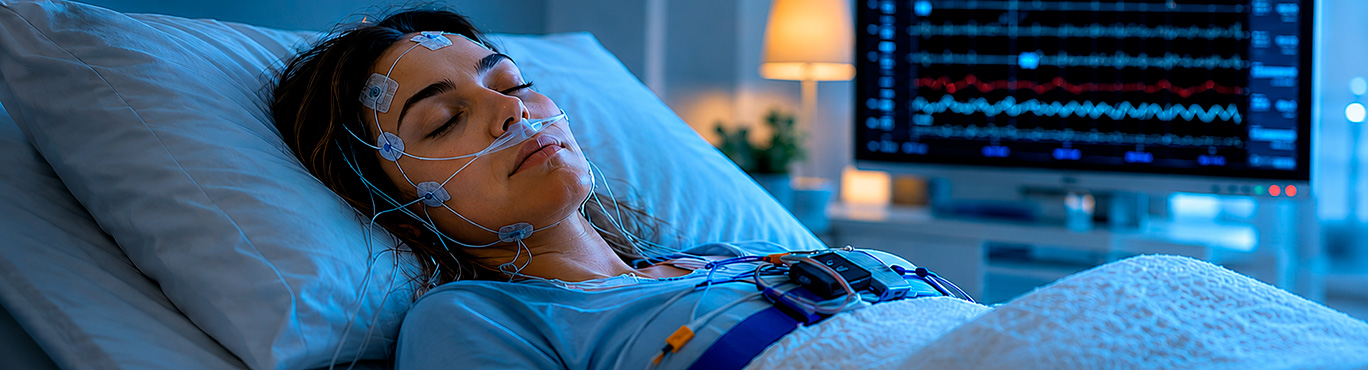
In-Hospital Overnight Polysomnography
Polysomnography is the gold standard for diagnosing sleep disorders.
It is performed during an overnight hospital stay and monitors multiple physiological parameters:
- Brain activity
- Eye movements
- Muscle activity
- Cardiac activity and electrocardiogram
- Breathing and nasal/oral airflow
- Blood oxygen saturation
- Body movements
It is a painless and highly accurate test. Although some patients may experience the so-called "laboratory effect," polysomnography remains the reference diagnostic tool.
Home Respiratory Polygraphy
For certain patients, simplified studies can be performed at home.
They are especially useful for diagnosing:
- Obstructive sleep apnea
- Snoring
- Nocturnal respiratory disorders
These tests assess breathing during sleep in the patient’s usual environment.
WatchPAT® and Peripheral Arterial Tonometry
The WatchPAT® system is an advanced home diagnostic technology based on peripheral arterial tonometry.
It provides useful information about:
- Respiratory events
- Oxygen saturation
- Sleep quality
- Sleep architecture
It is particularly useful in selected patients suspected of having sleep apnea.
Multiple Sleep Latency Test and Wakefulness Maintenance Test
These tests objectively assess:
- Degree of daytime sleepiness
- Ability to stay awake
- Disorders related to hypersomnia or narcolepsy
Drug-Induced Sleep Endoscopy (DISE)
When tests confirm obstructive sleep apnea, drug-induced sleep endoscopy identifies areas of airway collapse while the patient is asleep.
This information is essential for selecting the most appropriate treatment.
Sleep disorders require individualized treatment. The therapeutic choice always depends on an accurate diagnosis and often on the combined use of different strategies.
At Ruber Internacional Hospital, we design treatments tailored to each patient’s needs.
Respiratory Therapies
- CPAP (Continuous Positive Airway Pressure): a machine that keeps the airways open through a steady pressure of air during sleep.
- Ventilatory support
- Complementary therapies for sleep-related breathing disorders
Pharmacological Treatments
These are indicated for conditions that require them, such as:
- Narcolepsy
- Idiopathic hypersomnia
- Restless Legs Syndrome
- REM Sleep Behavior Disorder
- Other sleep disorders suitable for specialized medical treatment
Behavioral and Psychological Therapies
- Sleep hygiene
- Cognitive behavioral therapy for insomnia
- Interventions aimed at improving habits and behaviors related to rest
Specific Devices
- Mandibular Advancement Devices (MADs)
- Positional therapy systems and devices to maintain lateral sleeping position
Surgical Treatment
In selected cases, certain surgical procedures may help improve upper airway patency and nighttime rest.
Weight Management
A fundamental element in many patients with sleep-related breathing disorders and obstructive sleep apnea.
Specialists at Ruber Internacional Hospital recommend requesting a specialized assessment if you experience:
- Loud snoring
- Breathing pauses during sleep
- Excessive daytime sleepiness
- Frequent awakenings
- Persistent insomnia
- Non-restorative sleep
- Involuntary or vigorous movements during sleep
If your sleep is not restorative, tell us about your problem. Our team can help you improve your rest and your quality of life.
Neurology: 91 387 52 50 - 91 387 58 27