


Prostate Cancer: Not All Patients Need to Have Their Prostate Removed
Dr. Claudio Martínez-Ballesteros, a specialist in Urologic Oncology and Robotic Surgery at Hospital Ruber Internacional, part of the Quirónsalud Group, explains the alternatives available for treating certain prostate tumors without removing the gland, with the aim of preserving patients’ quality of life.
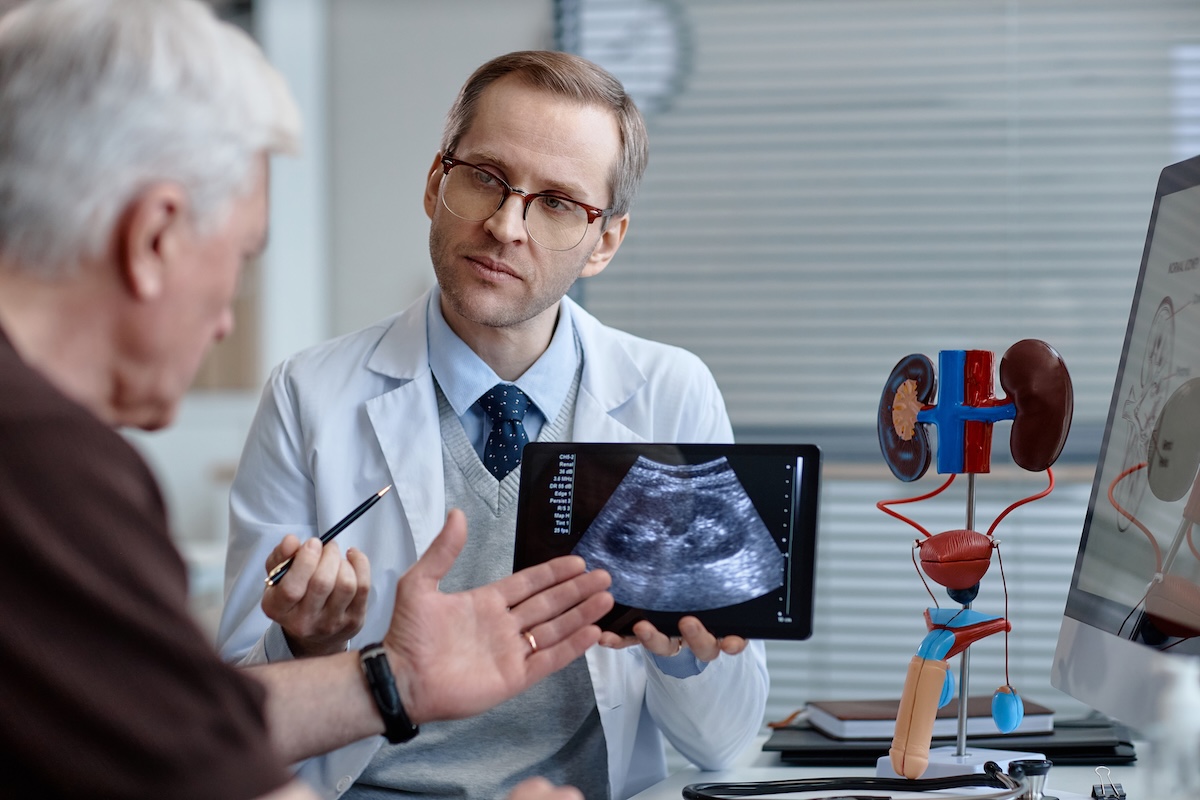
Receiving a prostate cancer diagnosis raises many questions and concerns. One of the most common is whether the entire prostate gland will need to be removed to eliminate the tumor. Although radical prostatectomy remains one of the main treatment options, advances in diagnosis and treatment now make it possible to manage certain localized tumors without resorting to this procedure.
This is explained by Dr. Claudio Martínez-Ballesteros, a specialist in Urologic Oncology and Robotic Surgery at Hospital Ruber Internacional, part of the Quirónsalud Group. He emphasizes that not all prostate cancers require the same approach and that it is essential to assess the characteristics of each tumor before deciding on the most appropriate treatment strategy.
"In patients with localized prostate cancer, we must evaluate the different treatment options available with curative intent," the specialist explains.
Radical prostatectomy involves the complete removal of the prostate and is an established treatment option for many patients. However, depending on the location, extent, and aggressiveness of the tumor, as well as the individual characteristics of the patient, other alternatives that allow the gland to be preserved may be considered.
The specialist emphasizes that the priority must always be to achieve the best possible control of the disease while also considering the potential impact of different treatments on the patient's quality of life.
Treating the Tumor Without Removing the Entire Prostate
 High resolution image. This link will open using lightbox, there may be a context switchAlternatives to surgery include radiotherapy, which can be administered through external beam radiation therapy or brachytherapy, a technique that delivers radiation directly inside the prostate.
Another option, for carefully selected patients, is focal therapy, which aims to target the specific area containing the tumor while preserving the remaining healthy prostate tissue.
This approach requires a precise diagnostic assessment to identify the location and extent of the lesion and determine whether the characteristics of the cancer make this type of treatment appropriate.
However, Dr. Martínez-Ballesteros stresses that not all patients are suitable candidates for these treatments and that decisions must be made following an individualized assessment.
"We need to evaluate each patient's personal circumstances, the type of tumor, and its prognosis. Based on all these factors, we can recommend the most appropriate treatment," he explains.
In certain cases of low-risk prostate cancer, active surveillance may also be considered. This strategy involves closely monitoring the disease through regular check-ups and diagnostic tests, reserving active treatment for patients who show signs of progression.
This approach does not mean neglecting the cancer, but rather avoiding or delaying treatments that may not be immediately necessary, always under specialist supervision.
Preserving Quality of Life: A Priority
One of the main concerns among patients diagnosed with prostate cancer is the potential impact of treatment on urinary and sexual function.
Urinary incontinence and erectile dysfunction are two complications that may occur following certain treatments and can significantly affect patients' daily lives and emotional well-being.
In this regard, focal therapies aim to preserve more healthy tissue and, in appropriately selected patients, reduce the risk of certain functional complications.
However, preserving the prostate does not guarantee the absence of side effects, and the different treatment options have distinct indications, risks, and oncological outcomes. Furthermore, some prostate-preserving strategies require long-term follow-up and may involve additional treatments.
For this reason, the specialist highlights the importance of explaining the advantages and limitations of each procedure so that patients can actively participate in choosing their treatment.
Age, general health, tumor aggressiveness, life expectancy, and personal preferences are all factors that must be considered before recommending a particular intervention.
The RADAR Study Reveals That 51% of People at Urological Risk Have Never Consulted a Specialist
 High resolution image. This link will open using lightbox, there may be a context switchThe importance of improving awareness and encouraging urological consultations is also reflected in the findings of the RADAR Study: First Urological Health Barometer in Spain, conducted by LYX Urología. The study examines how the Spanish population perceives its urological health, the occurrence of symptoms, and the main barriers to seeking specialist care.
Based on 1,014 online interviews with men and women aged between 25 and 75, the study reveals that 51% of people classified as being at urological risk have never visited a urologist, despite experiencing symptoms related to this medical specialty.
Furthermore, only 18.8% of individuals in this group have been diagnosed with a urological condition, meaning that approximately eight out of ten have no diagnosed urological disease.
Among the most frequently reported symptoms, 71.3% of respondents say they need to get up several times during the night to urinate, 28.7% report difficulties with sexual intercourse, and 28.4% acknowledge experiencing involuntary urine leakage.
Dr. Juan Ignacio Martínez-Salamanca, Associate Head of the Urology Department at Hospital Ruber Internacional and Medical Director of LYX Urología, warns that a significant proportion of the population continues to normalize symptoms that should prompt a specialist assessment.
"One of the main messages from this Barometer is that we are normalizing symptoms that should not be considered normal. Getting up several times every night to urinate, experiencing urine leakage, or noticing changes in sexual function should not automatically be accepted as an inevitable consequence of aging," he explains.
These findings highlight the need to improve health education and make it easier for patients to seek medical advice when they notice persistent changes in their urological health.
Although urinary symptoms do not necessarily indicate the presence of prostate cancer, they may be associated with different conditions that require medical assessment to determine their underlying cause.
Lack of Awareness About Available Treatments: Another Barrier for Patients
The RADAR Study also identifies limited awareness of available urological treatments, particularly less invasive options.
This lack of information is especially relevant in conditions such as prostate cancer, where medical advances have expanded treatment possibilities and made it possible to tailor therapeutic approaches to each patient's individual characteristics.
According to Dr. Martínez-Salamanca, improving public knowledge of urological diseases and their treatment options is a fundamental part of prevention and healthcare.
"Prevention often begins with something as simple as recognizing a symptom and knowing that solutions are available. Today, we have a wide range of treatments and minimally invasive alternatives, but patients cannot choose options they do not know exist," he emphasizes.
The specialist also points out that embarrassment, lack of awareness, and the tendency to regard certain symptoms as an inevitable consequence of aging can delay medical consultations.
He therefore stresses the importance of fostering a relationship of trust between patients and specialists, allowing urinary function, sexual health, and the different therapeutic alternatives to be discussed openly and naturally.
An Individualized Treatment Approach for Every Patient
Advances in diagnostic and therapeutic techniques have paved the way for increasingly personalized prostate cancer care.
Today, managing this disease requires consideration not only of the tumor's characteristics but also of the patient's needs and expectations, particularly when several treatment options are available.
The Urology Department at Hospital Ruber Internacional, headed by Dr. Antonio Allona, with Dr. Juan Ignacio Martínez-Salamanca serving as Associate Head, emphasizes the importance of specialist assessment to determine which patients may benefit from prostate-preserving treatments and which require more extensive interventions to achieve adequate cancer control.
In this regard, Dr. Martínez-Ballesteros reiterates that treatment decisions must always be based on individualized medical criteria and that preserving the prostate should never take precedence over controlling the disease.
Providing patients with clear information, ensuring an accurate diagnosis, and evaluating the different therapeutic alternatives are essential to making decisions that consider both treatment effectiveness and potential functional consequences.
The ultimate goal is to offer each patient the most appropriate therapeutic strategy to control prostate cancer while seeking to preserve urinary function, sexual health, and quality of life whenever the characteristics of the disease allow.