





A small incision between the ribs allows mitral valve surgery without opening the sternum
Hospital Ruber Internacional has launched a minimally invasive cardiac surgery program that avoids opening the sternum and aims to improve postoperative recovery.
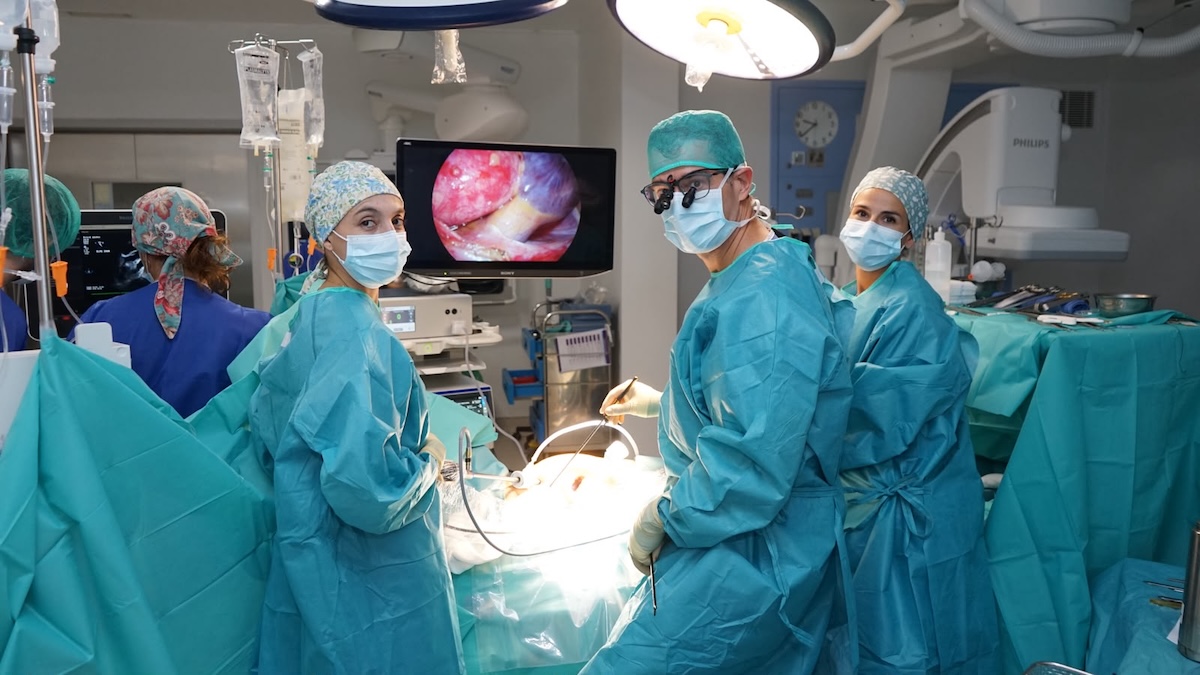
Heart surgery does not always require opening the sternum. Advances in cardiovascular surgery now make it possible to perform certain procedures through increasingly less invasive approaches, with the aim of reducing the surgical impact without compromising the safety and effectiveness of conventional surgery.
Hospital Ruber Internacional has launched a program for mitral valve surgery using a minithoracotomy and rib-sparing technique, an approach that provides access to the heart through a small lateral incision made between the ribs, without the need to open the sternum or use an intercostal retractor.
"The fundamental difference for the patient lies in the way we access the heart. Instead of performing a sternotomy, we reach the mitral valve through a small space between the ribs, preserving both the sternum and the rib cage," explains Dr. Luis Carlos Maroto Castellanos, co-director, together with Dr. José Enrique Rodríguez Hernández, of the Department of Cardiac Surgery at Hospital Ruber Internacional, part of Grupo Quirónsalud.
Heart surgery with a less invasive approach
In conventional cardiac surgery, the heart is usually accessed through a median sternotomy, which involves making an incision down the center of the chest and dividing the sternum longitudinally.
Minimally invasive mitral valve surgery offers a different approach. Through a small lateral incision in the chest, the surgical team accesses the heart between the ribs. The procedure is completed through small additional ports used to introduce a camera, which provides visualization of the surgical field, and the specialized instruments required to perform the operation.
The term rib-sparing refers specifically to one of the principles of this approach: avoiding the use of intercostal retractors in order to reduce postoperative pain.
"A smaller incision does not mean that valve surgery is any less safe or effective. What we are changing is the route of access, with the aim of minimizing the impact on the chest wall while maintaining the same objectives as conventional surgery," says Dr. Maroto.
What benefits can this approach offer patients?
Avoiding opening the sternum and minimizing trauma to the ribs may provide benefits during the postoperative period. In appropriately selected patients, this type of surgery may be associated with faster functional recovery, less wound-related pain, reduced impact on the lungs, a lower risk of bleeding and a better cosmetic result.
Beyond the size of the scar itself, preserving the sternum and reducing pain may help accelerate recovery and the patient’s gradual return to everyday activities, while also avoiding the need for sternal support vests.
"The aim of minimally invasive surgery is not simply to create a smaller scar. What really matters is reducing the trauma associated with surgical access and promoting the patient’s recovery whenever this can be done safely," emphasizes Dr. Manuel Carnero Alcázar, specialist in the Adult Cardiac Surgery Unit.
However, this type of approach is not necessarily suitable for every patient. The choice between conventional and minimally invasive surgery must be made on an individual basis, taking into account the nature of the mitral valve disease, the patient’s anatomy, the need for other simultaneous cardiac procedures and their overall clinical condition.
"It is not a matter of using a minimally invasive technique at any cost. The priority remains to perform the procedure that offers the best outcome for each patient. This is why patient selection and preoperative planning are essential," Dr. Carnero stresses.
A procedure that requires multidisciplinary coordination
Reducing the size of the incision does not make the procedure simpler. On the contrary, minimally invasive cardiac surgery requires experience, specific technology and close coordination between different healthcare professionals.
Cardiovascular surgeons, anesthesiologists, perfusionists, nursing professionals and the various teams involved throughout the perioperative period work together from the planning of the procedure through to the patient’s recovery.
"Minimally invasive surgery is, above all, a team effort. Developing these programs requires more than simply introducing new instruments; all the professionals involved need to understand the procedure and work in a coordinated manner before, during and after the operation," explains Dr. Luis Carlos Maroto.
The implementation of this video-assisted mitral valve surgery program using the rib-sparing technique represents the addition of a new procedure to the range of high-complexity cardiovascular surgery services available at Hospital Ruber Internacional.
This approach forms part of a progressive strategy to develop less invasive cardiac surgery programs, in which the route of access is adapted to the characteristics of the disease and the specific needs of each patient.
"The future of cardiac surgery also lies in our ability to achieve the same therapeutic objective while reducing, whenever possible, the impact of the procedure on the patient. Each case must be assessed individually, but having different surgical approaches available allows us to increasingly personalize treatment," the specialists conclude.