




Alopecia: Definition, Symptoms, Diagnosis, and Treatment
Dr. Diana Camacho, dermatologist and head of the Alopecia Unit at Hospital Ruber Internacional and CDI, explains this abnormal hair loss, which may affect the scalp or other areas of the skin such as the eyelashes, armpits, and beard.
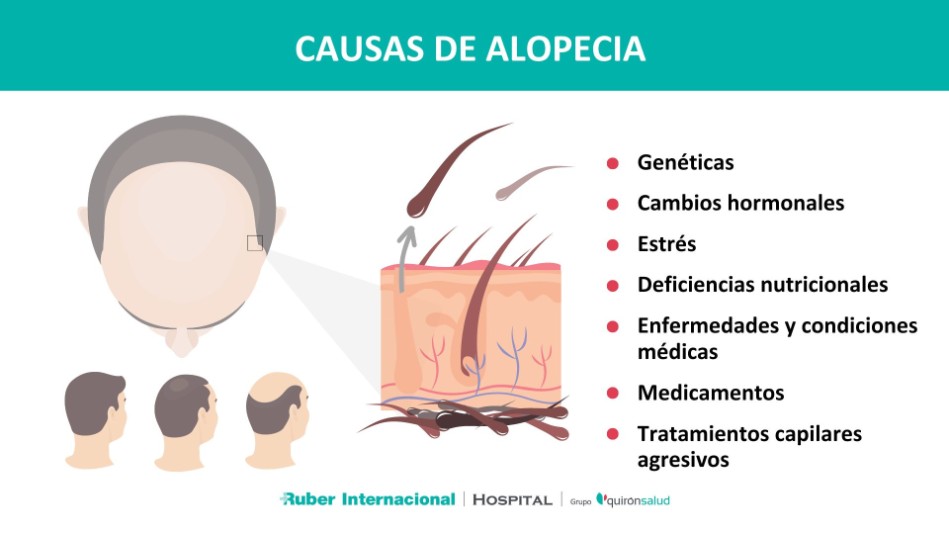
The term "alopecia" refers to the different conditions that involve hair loss. There are multiple types of alopecia and, generally, they are divided into two groups: scarring alopecias (which leave a "scar" and may cause permanent hair loss) and non-scarring alopecias, which may be reversible with treatment and allow recovery of lost hair.
What are the most common symptoms of alopecia?
Symptoms vary depending on the type of alopecia. For example, in telogen effluvium, the main symptom is excessive hair shedding—more hair than is normally lost.
In androgenetic alopecia, there is usually no dramatic hair shedding; rather, there is a gradual decrease in hair density over time.
In cases of lichen planus, itching, burning, and scaling of the scalp may occur.
How is alopecia diagnosed?
Many types of alopecia can be diagnosed without the need for additional tests. A detailed medical history and a proper physical examination are often sufficient.
Sometimes blood tests are required and, in some cases, a biopsy may be performed to examine the tissue under a microscope and determine exactly which type of alopecia is present.
 This link opens in a popup window
What is the treatment for alopecia?
Treatment varies according to the diagnosis. Today, the medications used are very effective and safe. Androgenetic alopecia ("common baldness," which affects both men and women) has treatments that can maintain and restore much of the lost hair density.
Treatments may be topical, oral, or administered through mesotherapy (injections), and they can be combined to achieve better results.